Currency:

2026 / 06 / 19
Aerial classes for children combine movement, acrobatics, and play using suspended apparatus such as aerial silks, hoops, and hammocks. Kids learn to climb, hang, perform simple tricks, develop body control, and move confidently in space—all through a gradual, age-appropriate approach under proper supervision.
In this article, we explain what aerial classes for children look like, how aerial silks differ from aerial hoop training, what to consider when choosing a school, and why safety is just as important as having fun and enjoying movement.
Table of Contents
- What Are Aerial Classes for Children?
- Aerial Silks, Aerial Hoop, or Hammock – Which Is Best?
- What Benefits Do Aerial Classes Offer Children?
- What Type of Child Is Aerial Training Suitable For?
- Safety in Children's Aerial Classes
- What to Look for When Choosing a School
- Can Children Practise Aerial at Home?
- How to Prepare Your Child for Their First Aerial Class
- Aerial Classes Help Children Build Trust in Their Bodies
- FAQ
What Are Aerial Classes for Children?
Aerial classes for children are a form of physical activity where kids train on apparatus suspended above the ground. This may include aerial silks, a hammock, an aerial hoop, or other equipment used in aerial arts.
For a child, this often doesn’t feel like a traditional workout. It’s more like active play—climbing, swinging, spinning, balancing, and discovering what their body can do. The difference is that instead of playground equipment, children use professional aerial apparatus under the guidance of an instructor and within clearly defined safety rules.
The most important factor is ensuring that classes are adapted to the child’s age, attention span, and abilities. Sessions for younger children focus mainly on movement-based play, while older children may learn more technical climbs, poses, and simple aerial sequences.
Aerial Silks, Aerial Hoop, or Hammock – Which Is Best?
Aerial silks classes for children involve working with long pieces of fabric suspended from above. Children learn basic grips, simple climbs, introductory wraps, and beginner positions performed close to the ground. Aerial silks require focus, as children need to understand how the fabric supports the body and how different wraps work.
Aerial hoop classes offer a different experience. The hoop is a rigid apparatus that provides a more stable point of contact than fabric, although it can still swing and rotate. Beginners usually start by learning how to mount the hoop, sit comfortably inside it, perform simple poses, dismount safely, and develop body control within the apparatus.
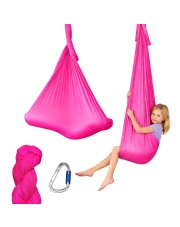
An aerial hammock is often considered a gentler introduction to aerial arts because the fabric forms a supportive loop where children can sit, lean, or perform basic positions with greater support. However, this does not mean hammocks are risk-free. Proper mounts, dismounts, fabric control, and instructor supervision remain essential.
What Benefits Do Aerial Classes Offer Children?
Aerial classes help develop strength, coordination, and body awareness. Children engage their arms, back, core, legs, and grip strength, but not through traditional strength-training exercises. Instead, physical development happens naturally through fun and engaging movement.
Spatial awareness is another major benefit. Children learn where their hands and feet are, how to rotate their bodies, how to enter and exit positions safely, and how to move confidently in space. This develops not only physical ability but also concentration and mindfulness.
Aerial training can also boost self-confidence because progress is highly visible. A child’s first hang, first hoop mount, or first silk pose provides an immediate sense of achievement. The goal is not to rush into difficult tricks but to create moments of success and growth: “I was scared before, but now I can do it.”
What Type of Child Is Aerial Training Suitable For?
Aerial classes are often a great fit for children who enjoy climbing, hanging, spinning, swinging, and trying new challenges. They can be especially appealing to kids who may not enjoy team sports but love movement, creativity, and personal achievement.
Children do not need to be exceptionally strong or flexible when they start. Strength and mobility develop gradually over time. More important qualities include listening skills, patience, the ability to wait their turn, and a willingness to follow safety instructions.
Age alone should not determine readiness. One six-year-old may be ready for beginner aerial classes, while another may benefit more from general movement activities first. A good school adapts the programme to the group rather than rushing children into advanced skills simply because they look impressive.
Safety in Children's Aerial Classes
Aerial training can be an incredibly rewarding activity for children, but only when safety is taken seriously. Aerial silks, hammocks, and hoops are not equipment for unsupervised play. Because they support body weight, they require proper rigging, appropriate crash mats, and instructors who understand how to guide children safely through each stage of learning.
Quality classes do not begin with high climbs, drops, or advanced inversions. Children first learn the basics: how to approach the apparatus, when it is safe to use it, how to dismount properly, where to stand, what not to do around other participants, and how to communicate if they feel uncomfortable or afraid.
Crash mats should be positioned beneath the apparatus—not stored nearby just in case. New skills should be practised close to the ground, with appropriate spotting and clear instruction. Children should also feel comfortable saying, “I’m scared” or “I don’t want to do this today” without feeling pressured or embarrassed.
For more information about aerial safety, check out our article: Aerial Safety – What Should You Keep in Mind During Training?
What to Look for When Choosing a School
When selecting aerial classes for children, it’s important to look beyond attractive photos and social media content. What matters most is how seriously the school approaches safety and how it manages children's classes.
Positive signs include small class sizes, clear safety rules, readily available crash mats, instructors experienced in working with children, and a calm, supportive environment. Ask how beginner classes are structured, whether children start at low heights, how groups are organised, and how frequently equipment is inspected.
Warning signs may include classes where children immediately climb high, learn dramatic drops, or use equipment without close instructor supervision. It’s also concerning if staff dismiss questions about rigging, crash mats, or safety procedures.
Can Children Practise Aerial at Home?
Home aerial training can be a valuable supplement to instructor-led classes, but it requires extra caution. For children, safety depends not only on the equipment itself but also on proper installation, adequate training space, and adult supervision.
It’s important to remember that online tutorials cannot replace individual coaching. A child may see the final result of a trick but not understand all the technical details or potential mistakes involved. This is particularly true for aerial silks and hammocks, where correct fabric placement is critical for safety.
If a child practises at home, it’s best to focus on reviewing skills already learned in class, strength and conditioning exercises, mobility work, stretching, and general physical preparation. Learning new tricks, advanced wraps, or higher-level aerial skills should be reserved for instructor-led sessions.
Common sense is essential. A properly prepared training space, suitable equipment, a crash mat, and adult supervision can make home practice a safe complement to regular aerial training.
How to Prepare Your Child for Their First Aerial Class
For a first class, children should wear comfortable, fitted clothing that will not catch on the equipment. Leggings and a top that covers the midsection are usually ideal for aerial silks and hammock classes. For aerial hoop, it is also helpful to cover areas of skin that may come into contact with the metal apparatus, as it can create pressure points.
Hair should be tied back, and jewellery should be removed before class. Bring a water bottle and help your child understand that the first session is about becoming familiar with the equipment, learning safety rules, and exploring movement—not performing advanced acrobatics.
It’s also worth reminding children that they don’t have to master everything immediately. Confidence in aerial arts develops gradually. Sometimes the biggest achievement is simply getting into the hoop, performing a first hang, or climbing into the hammock for the first time.
Aerial Classes Help Children Build Trust in Their Bodies
The greatest value of aerial training for children is not performing impressive tricks as quickly as possible. More importantly, it helps children learn about their bodies, develop strength, improve coordination, build concentration, and gain confidence in their abilities.
Aerial hoop, silks, and hammocks can all be wonderful forms of physical activity when taught thoughtfully and without pressure. Children gain a space for movement, creativity, play, and gradual personal growth.
The best classes are the ones where children leave feeling tired, proud, and excited for their next session—not frightened or pushed into skills they are not ready to perform.
FAQ - Frequently Asked Questions
What age can children start aerial classes?
There is no universal age requirement. It depends on the school, the type of class, and the individual child’s readiness. Younger children often begin with movement-based play, hammocks, or general physical development activities, while more technical aerial silks and hoop training is typically introduced at an older age.
Is aerial hoop safe for children?
Yes, provided that classes are led by a qualified instructor, conducted at appropriate heights, and use suitable crash mats. Children should first learn safe mounts, dismounts, simple positions, and body control before progressing to more advanced skills.
How does aerial silks training differ from aerial hoop?
With aerial silks, children work with fabric and learn grips, wraps, and positions supported by the material. Aerial hoop uses a metal apparatus that provides a different type of support and body contact. Both disciplines develop strength, coordination, and body awareness, but the training experience feels quite different.
Are aerial silks a good place for children to start?
They can be, provided classes begin with the fundamentals and are conducted close to the ground. It’s important that children learn from qualified instructors rather than attempting complex wraps from online tutorials.
Does a child need to be strong to start aerial training?
No. Strength develops naturally through regular practice. At the beginning, enthusiasm for movement, concentration, listening skills, and understanding basic safety rules are far more important.
What should children wear to aerial classes?
Leggings and a fitted top that covers the midsection are usually the best option. Clothing should protect the skin from pressure and friction while remaining close-fitting enough not to catch on the apparatus.
Can children practise aerial at home?
Home practice can support regular classes if children focus on skills they already know, train under adult supervision, and use a properly prepared and safe environment. Learning new tricks, advanced wraps, or higher-level aerial skills should always take place under the guidance of a qualified instructor.