Currency:

2026 / 06 / 01
Aerial yoga is becoming increasingly popular not only in yoga studios but also in pole dance and aerial arts schools. For some, it’s a gentler form of movement; for others, it’s a way to stretch a tight body after work or complement more strength-focused training. The defining feature of these classes is a suspended fabric yoga hammock, which partially supports your body weight and completely changes the way movement feels.
Thanks to this suspension, aerial yoga offers a unique combination of mobility, strength-building, and decompression that’s hard to find in traditional mat-based workouts. Hammock exercises help improve flexibility, body awareness, and stability, but many practitioners highlight one benefit above all: how their body feels after class. Less tense, more open, and simply lighter.
In this article, we explain exactly what aerial yoga is, the benefits of training with a hammock, and why so many people stick with this form of movement long term. It’s also worth noting that although some people refer to it as yoga with silks, aerial yoga uses a specially designed yoga hammock rather than traditional aerial silks.
Table of Contents
What Is Aerial Yoga and How Does a Yoga Hammock Work?
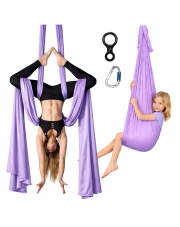
Aerial yoga is a form of exercise that uses a fabric yoga hammock suspended from the ceiling. It combines elements of traditional yoga, stretching, mobility work, and gentle strength training, but the suspended setup allows the body to move in a completely different way than it does on a mat.
The yoga hammock is what makes many poses more accessible. The fabric partially supports your body weight, helps with balance, and allows you to move deeper into stretches without excessive strain. At the same time, aerial yoga requires core control and stability, meaning that even slower movements effectively engage the deep stabilizing muscles.
Unlike more acrobatic aerial disciplines, aerial yoga focuses primarily on fluid movement, breathwork, and body awareness. Classes are usually slower-paced and are not centered around advanced tricks or dynamic aerial transitions.
The Benefits of Aerial Yoga
One of the greatest benefits of aerial yoga is improved mobility and flexibility. A yoga hammock allows you to increase your range of motion more safely, particularly around the hips, shoulders, and spine. Many people also notice that their body relaxes more easily and releases tension faster than during traditional stretching sessions.
Regular aerial yoga practice also helps strengthen deep core muscles and improve overall stability. Even simple hammock exercises require balance, movement control, and conscious body positioning. As a result, your core, back, and shoulder girdle are naturally engaged throughout the workout.
Aerial yoga is also often praised for creating a feeling of spinal decompression. Suspension can temporarily reduce tension in the back and create a sense of lengthening through the body, especially after long hours of sitting. However, it’s important to remember that aerial yoga is not a substitute for medical treatment or individualized therapy for health-related conditions.
Hammock-based exercises also improve coordination and body awareness. Being suspended changes the way your body responds to balance and center-of-gravity shifts. That’s why many practitioners notice better movement control not only during class but also in everyday life after a few weeks of training.
Why So Many People Keep Coming Back to Aerial Yoga
For many people, aerial yoga becomes more than just another workout. The slower pace, breath-focused movement, and feeling of suspension often create a sense of calm and relaxation that can be difficult to find in more intense forms of exercise.
The simple enjoyment of movement also plays a major role. A yoga hammock creates a feeling of lightness and allows the body to move differently than it does during traditional workouts. For many, this makes it easier to stay consistent and return to class without feeling pressured or obligated.
Aerial yoga also attracts people who never felt comfortable in traditional fitness classes. You don’t need to be exceptionally strong or flexible to get started. Your body gradually adapts to suspension and learns a completely new way of moving at its own pace.
Is Aerial Yoga Suitable for Everyone?
Aerial yoga can be adapted to different skill levels, but like any form of physical activity, it has its limitations. People with spinal conditions, uncontrolled blood pressure, dizziness, recent injuries, or certain heart conditions should exercise caution. In these cases, it’s best to consult a doctor or physiotherapist before starting.
The quality of instruction also matters. Well-structured aerial yoga classes do not throw beginners straight into advanced inversions or extreme ranges of motion. Instead, the focus should be on gradually becoming comfortable with suspension, learning movement control, and building confidence in your body.
That’s why beginners should choose entry-level classes and practice under the guidance of an instructor who can adapt exercises to the group’s abilities.
What Aerial Yoga Offers Beyond Stretching
For many people, aerial yoga becomes a way to stay active, improve mobility, and take a break from everyday stress. Hammock exercises help strengthen the body, improve movement awareness, and offer a fresh perspective on training.
It’s not about impressive poses or flawless execution. The greatest value of aerial yoga often lies in the feeling of lightness, greater freedom of movement, and the sense that your body is functioning in a calmer, more mindful way.
FAQ – Most Common Questions About Aerial Yoga
Is aerial yoga suitable for beginners?
Yes. Aerial yoga is often chosen by complete beginners who have never practiced yoga or any form of suspended movement before. The yoga hammock partially supports your body weight and provides additional stability, making many poses easier than on a traditional yoga mat. Well-designed classes start with the basics and gradually introduce participants to working in suspension.
Do you need to be flexible to start aerial yoga?
No. Flexibility and mobility develop gradually through regular practice. Many people start aerial yoga specifically because they feel stiff from desk work or have a limited range of motion. The yoga hammock allows you to work on flexibility more safely without putting excessive strain on the body.
What are the benefits of aerial yoga beyond stretching?
Aerial yoga does more than improve flexibility. It strengthens deep stabilizing muscles, enhances balance, and increases body awareness. Hammock exercises engage the core, back, and shoulders, even when the workout feels gentle. Many people also notice improved posture and reduced tension in the neck and upper back.
Can aerial yoga help with stress and tension?
For many people, this is one of its biggest benefits. Aerial yoga is generally slower-paced than many traditional workouts, and the combination of movement, breathwork, and suspension helps calm both body and mind. Many practitioners describe feeling deeply relaxed and mentally refreshed after class, especially following a demanding day.
Does aerial yoga help decompress the spine?
Being suspended in a hammock can create a feeling of decompression and reduced tension in the back, especially after long periods of sitting. Many people leave class feeling lighter and freer in their movement. However, aerial yoga should not be viewed as a replacement for medical treatment or rehabilitation. If you have existing health concerns, consult a qualified healthcare professional first.
What type of yoga hammock should you choose?
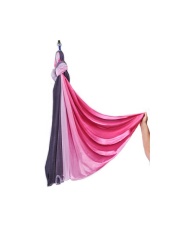
A yoga hammock should be made from durable fabric designed specifically for suspended training and should include appropriate mounting hardware. It’s also important to choose the correct fabric length for your ceiling height and ensure the hammock is rated for the required load capacity. If you plan to practice at home, choose equipment designed specifically for aerial yoga rather than uncertified alternatives.
Can aerial yoga help with weight loss?
Aerial yoga can support weight-loss goals because it engages the entire body and encourages regular physical activity. However, it is not primarily a calorie-burning workout. Most people choose aerial yoga to improve mobility, enhance well-being, and build functional strength.
Is aerial yoga safe?
Yes, provided that classes are led by a qualified instructor and the yoga hammock is installed correctly. In the beginning, it’s important to gradually adapt your body to suspension and avoid jumping straight into advanced inversions. Well-taught classes focus first and foremost on movement control and safety.
What should you wear for aerial yoga?
Comfortable, close-fitting clothing that covers your legs and midsection is usually the best choice. The fabric of the yoga hammock can rub against the skin in certain positions, so full-length leggings and a fitted top generally provide greater comfort during practice.
How is aerial yoga different from aerial silks?
Yes, they are different disciplines. Aerial yoga uses a closed yoga hammock that supports the body and is primarily designed for gentle movement, stretching, and mobility work. Aerial silks involve two long pieces of fabric and are typically more strength-focused and acrobatic in nature.
Can you practice aerial yoga at home?
Yes, but proper installation and secure suspension points are essential. Never install aerial equipment without first verifying the structural integrity of the ceiling and using certified mounting hardware. Beginners are strongly encouraged to learn the fundamentals in instructor-led classes before practicing at home.