In this section you can specify your preferences regarding our use of cookies.
Customize consents
Cookies and related technologies enable the website to function correctly and help us tailor our offer to your needs. You can accept our use of all these cookies and proceed to the store, or customize cookie usage according to your preferences by selecting the 'Customize consents' option.
Professional Powder-Coated Pole Dance Pole – One-Piece Construction for Intensive Training
The one-piece powder-coated pole dance pole is designed for pole dance studios, training facilities, and dancers who train regularly and need equipment built to last. This is not a modular pole assembled from extensions, and it’s not a short-term solution. In this version, you get one continuous steel section – no joints in the working area, no connections that may gradually loosen, and no internal threads working under load.
In practice, this means even force distribution along the entire length of the pole and a stable, predictable feel during training. That’s exactly why one-piece poles are the standard in the professional pole dance environment – where equipment is used daily by multiple athletes.
Custom-Made for Your Exact Ceiling Height – No Gaps, No Expansion Adjustments
This one-piece pole dance pole is manufactured to match the exact height of your space – from floor to ceiling mounting point. It does not rely on extensions and does not leave any adjustment range that needs to be tightened using an expansion mechanism, as with modular poles. Once installed, the pole stands perfectly vertical and delivers that characteristic “studio-grade” stability, especially important for advanced tricks and high-intensity training.
Reinforced Wall Thickness for Higher Ceilings
The taller the room, the greater the forces acting on the pole during dynamic movements. For heights above 3.5 m, we use reinforced wall thickness to increase rigidity and reduce flex. This is the standard expected in professional training facilities, where the pole must remain stable, predictable, and safe under intensive use. Upon request, we can also manufacture shorter poles with reinforced walls.
Spin / Static Mode Switch with Pin System – No Screws
In our one-piece poles, the mode switch is operated using a pin system, not a traditional screw. This solution is more resistant to wear during frequent switching and more convenient during group classes. Magnetic pins eliminate the issue of losing small parts, which matters in studios where spin and static modes are changed multiple times a day. The mechanism is designed to maintain precision for years.
Powder-Coated Finish – Enhanced Grip and Interior Matching
Powder-coated pole dance poles offer a different surface feel compared to polished steel. For many dancers, this means increased grip, especially during the early stages of learning or when struggling with slipping on classic finishes. Powder coating also allows you to match the pole to your studio’s aesthetic – the most popular options are black and white.
If needed, the surface can be refreshed with re-coating, extending the visual lifespan of the pole even under intensive use.
Diameters Tailored to Hand Size and Training Style
The pole is available in 42 mm and 45 mm diameters. This allows you to choose based on hand size and training style. Smaller diameters provide an easier grip for dancers with smaller hands and during fast transitions, while 45 mm remains the classic studio standard, frequently selected for intensive group classes.
Why Are One-Piece Poles Used in Studios and Competitions?
Because they offer the most predictable performance under heavy load and intensive use. No joints, no modular connections, no stress points between segments. A one-piece pole delivers the highest level of stability available in pole dance equipment, which is why it’s the preferred choice in professional studios and competitive environments.
Who Is a Powder-Coated One-Piece Pole Best For?
It’s the right choice if you train regularly, run a studio or training space, want equipment built for years of use, and prefer enhanced grip with the option to match the pole color to your interior. It’s also an excellent home solution if you know pole dance is a long-term commitment and you need a stable, made-to-measure setup.
Technical Specifications – One-Piece Pole Dance Pole
Weight: 10–20 kg depending on pole length.
Maximum load: up to 150 kg, ensuring safety even during dynamic moves.
Pole diameter: 42 mm or 45 mm – ideal for professional pole dance training.
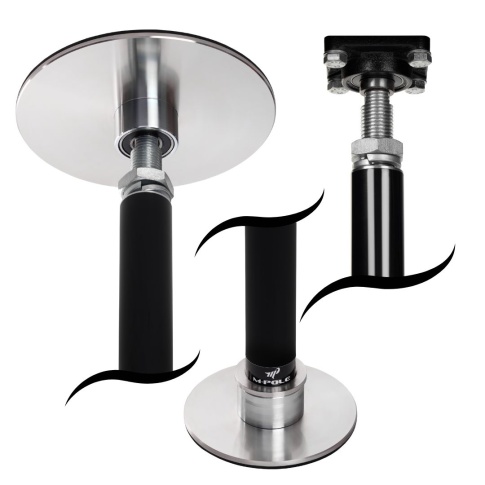
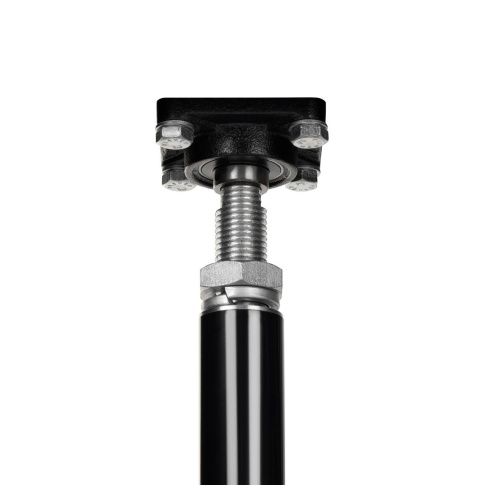
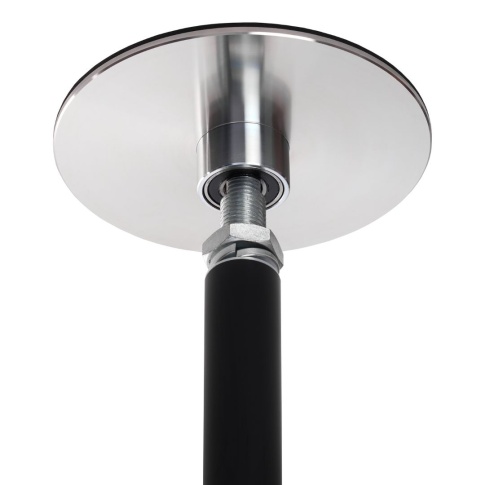
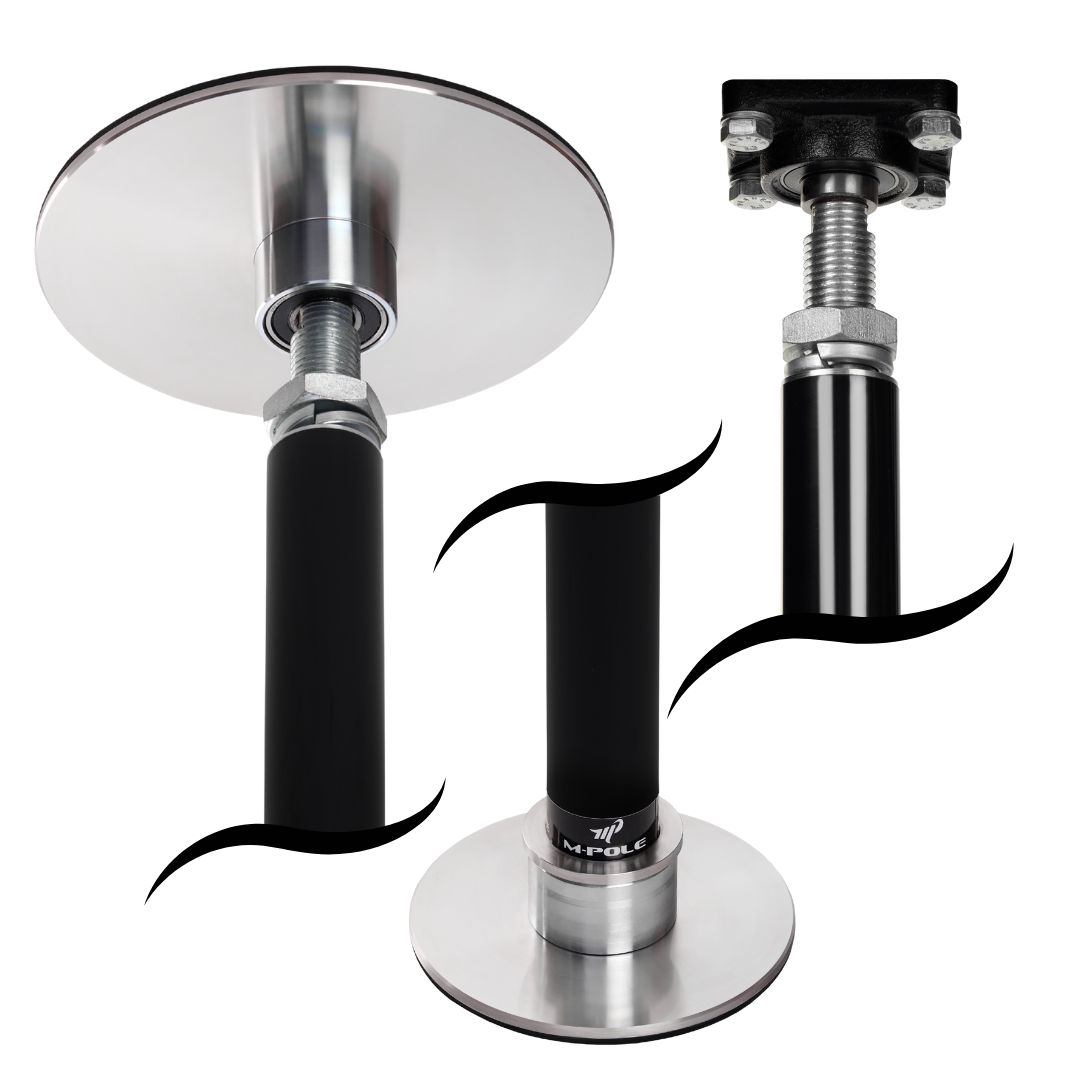
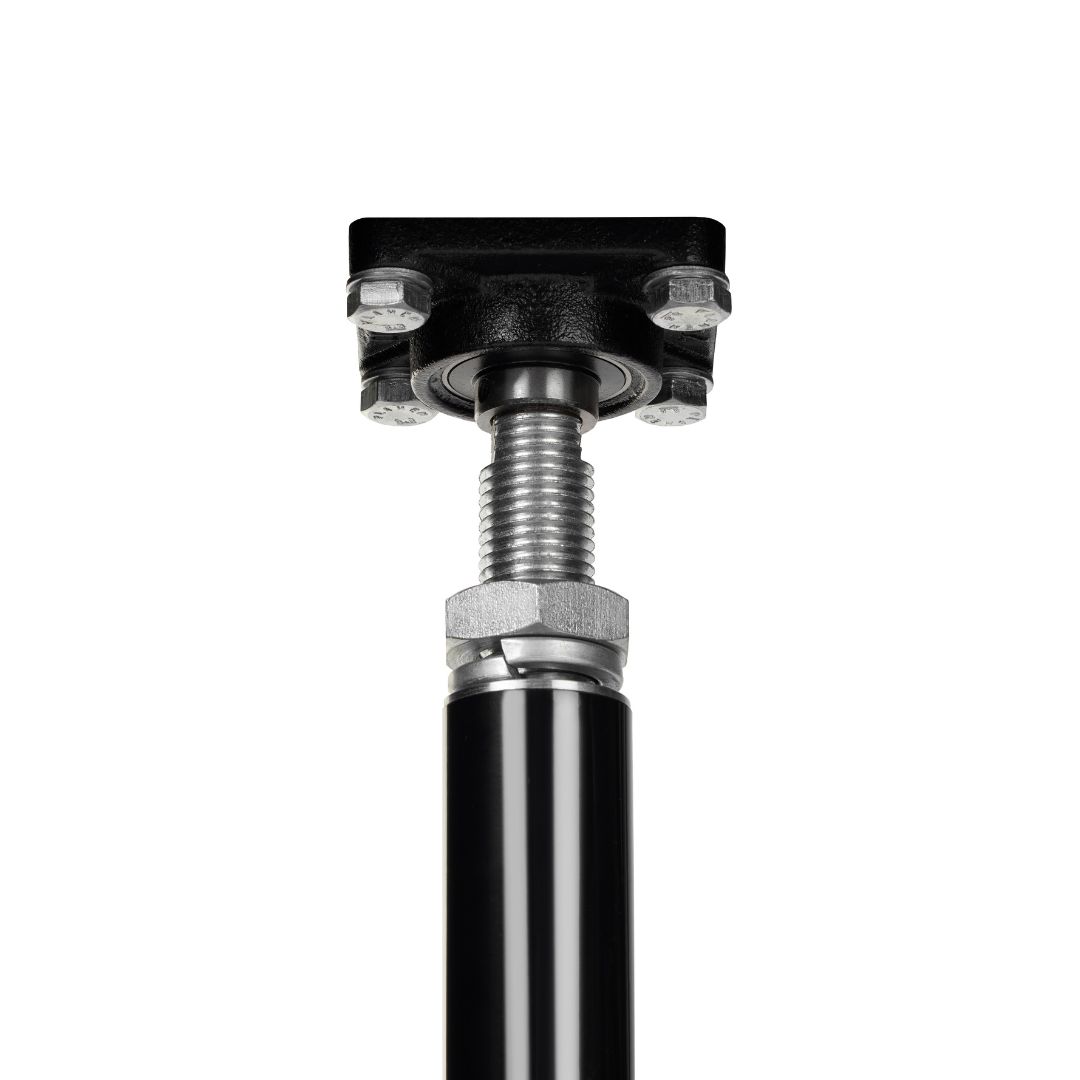
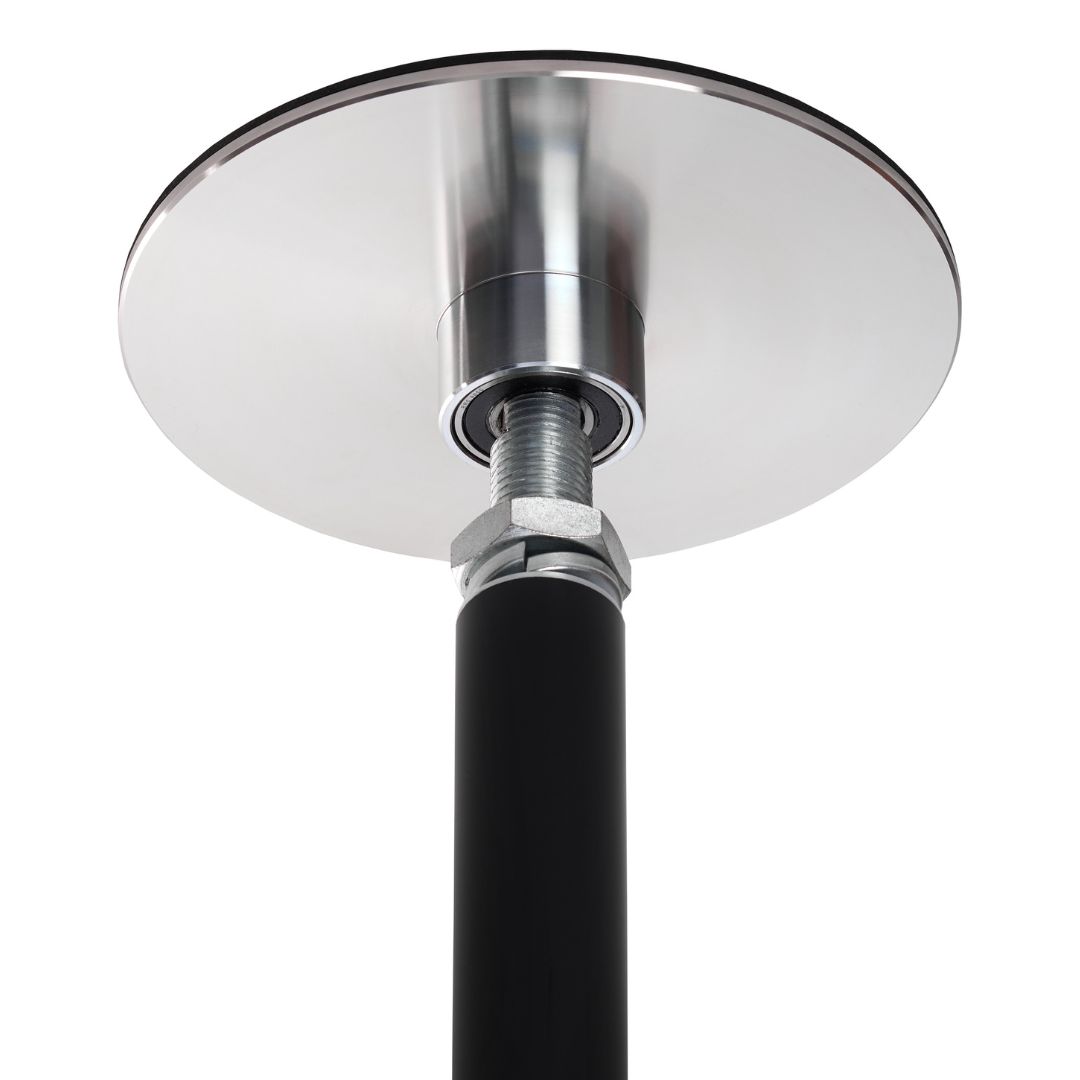
Top plate / permanent mount diameter: 20 cm / 8.5 cm – stable and secure ceiling mounting.
Bottom plate diameter: 15 cm – ensures stability during use.
Installation time: quick setup in 1–2 minutes without additional tools.
Warranty: 12 months.
Material: powder-coated stainless steel (pole coated, bases in silver, permanent mount in black).
Cleaning: use a cloth with a 50/50 alcohol and water solution. Avoid cleaning with water only – it may cause dark marks on polished poles.
Mode switch static ↔ spin: magnetic pin system; installation clearance between the pin and the hole is 0.5 mm.
Level: professional equipment recommended for advanced users and studios.
Returns: not available – custom-made product cut to your room height.
Country of manufacture: Poland
We will tailor the offered pole to your space. Simply provide the exact room height in your order notes – the height of the room where you plan to installthe pole. To account for minor measuring inaccuracies, we leave an adjustment allowance of -2 cm / +6 cm. This ensures your pole will fit your room perfectly.
We recommend fixing the pole to the ceiling using a permanent mount from a height of 320 cm. From 350 cm and above, securing the pole to both the ceiling and the floor is mandatory. When installed with a permanent mount, the pole can still be removed at any time – the mount remains in the ceiling until unscrewed. To remove the pole, loosen the nut and the expansion thread, then slide the pole out of the mount.
Poles over 4 metres – shipping is priced individually. The transport cost is not included in the pole price and will be quoted separately by the store. We arrange transport via freight exchange or deliver the poles ourselves if installation service is included. On-site installation is available starting from 7 poles. For full details, please contact us by email.
Custom colour poles – colours are selected from the RAL palette. The colour chart shown is for reference only. Not all colours are available, so please contact us to confirm availability. If you order at least 3 poles in the same colour, the price per pole will match the standard black or white powder-coated price.
Low poles with FAST SPIN – if you require enhanced spin performance for shorter poles, the standard surcharge for additional reinforcement material (to increase weight and rigidity) is 300 PLN gross.
Product includes:
pole
top and bottom plate depending on your selected option
Tool set: 21 mm open-end wrench, pipe wrench
Order the M-Pole one-piece pole dance pole and train safely at home or in a professional studio – choose equipment that supports your progress.
Thinking about buying? Have questions? Browse our blog posts or get in touch with us – we’ll help you choose the right solution.
Studios where our one-piece poles are installed
What room heights does the classic one-piece pole fit?
The one-piece pole dance pole is made to order, so in practice there is no minimum height requirement – the only limitation is whether you can realistically train in your space. The standard construction fits rooms up to 350 cm and uses a 2 mm wall thickness. Above 350 cm, up to a maximum of 5 metres, we use a one-piece pole with a reinforced wall thickness, the same type used at pole dance competitions. This ensures maximum safety and stability. Both polished stainless steel poles and powder-coated poles follow the same specifications within this height range.
What one-piece pole diameters are available and which one should I choose?
M-Pole one-piece poles are available in two options: 42 mm and 45 mm. It’s best to choose the diameter you train on at your pole dance studio to keep training consistent and comfortable. If you plan to compete, we strongly recommend 45 mm, as it is the standard at many international sports events. It’s much easier to switch from 45 mm to 42 mm than the other way around. If you don’t plan to compete and you want maximum comfort for everyday home training, choose 42 mm – it offers an easier grip and can feel more comfortable.
How do I choose the right pole for my room height?
To choose a one-piece pole for your space, provide the exact height from the floor to the ceiling mounting point. Based on this measurement, we cut the pole to fit your interior perfectly. This makes installation easier, increases stability, and eliminates unwanted play caused by joints. Measure using a tape measure at the mounting point or a laser level. If you use a laser level, measure several times to avoid errors. A pole that is too short or too long can cause installation problems, so accurate measurement is essential for safety and training comfort.
Is a one-piece pole more stable than a modular pole?
Yes, a one-piece pole dance pole is significantly more stable because it has no joints that could loosen during use. This design provides maximum safety and comfort even during demanding tricks, intense spins, and daily studio use.
If I want to prepare for pole dance competitions, which pole should I choose?
The best choice is a one-piece polished pole with a 45 mm diameter, because this is the most common setup used at pole dance competitions in Poland and worldwide. In sports federations, 45 mm is the standard. Some commercial competitions still use 42 mm, but it’s much easier to switch from 45 mm to 42 mm than the other way around. A polished finish is the classic competition choice. Only in IPSF you may occasionally see brass poles, but at most national and international events polished poles are used.
Where can I try and test your poles?
M-Pole pole dance poles are installed in over 70 pole dance studios across Poland. We provide a dedicated map showing studios that use our equipment, so you can find the nearest location and test a one-piece pole in practice. Our poles are also installed at most pole dance competitions, so by choosing M-Pole you train on the same equipment used by athletes on stage.
Can I install a one-piece pole in an apartment building?
Yes, a one-piece pole dance pole can be installed in an apartment building as long as you have a concrete ceiling and a level surface. Up to 3 metres, the pole can be pressure-mounted without fixing it to the ceiling. Above this height, a permanent installation is recommended for safety. Pressure-mounted poles can be used up to 3.30 m maximum. Above that limit, fixing the pole to the ceiling is required. Each base of our standard pole includes an option to screw it into the floor. If your ceiling-to-floor structure flexes and you prefer extra security, you can also secure the pole to the floor.
Can I install a one-piece pole on a suspended ceiling?
Installing a pole dance pole directly on a suspended ceiling is not possible, because this type of construction is too fragile and will not withstand high loads. Whether you want a pressure-mounted setup or a permanent mount, plasterboard is not safe. The only solution is to cut an opening in the suspended ceiling and install the permanent mount directly into the load-bearing structural ceiling above. For aesthetics, we offer dedicated covers for plasterboard ceilings to hide the opening after removal.
Which surface is better for beginners?
Most often, a polished stainless steel pole is recommended, because that is the surface used at competitions and in most pole dance studios. This means beginners learn on a professional surface right away, although it can be more demanding. A powder-coated pole provides more grip and can feel more forgiving, but the increased friction makes the skin warm up faster and may feel uncomfortable. If your studio uses a powder-coated pole, choosing the same finish for home can make switching between surfaces easier. Keep in mind that changing from powder-coated to polished (or the other way around) takes time and may feel challenging at first.
How should I clean a polished pole and a powder-coated pole to keep the best grip?
Powder-coated poles are very durable, so you can safely clean them with pure alcohol – they will keep their grip properties. Polished stainless steel poles can also be cleaned with pure alcohol, which removes sweat and oils effectively. Only chrome poles should be cleaned with a 50/50 water and alcohol solution to avoid damaging the finish. For best grip, your hands should always be clean and degreased.
Is a polished pole suitable for people with a nickel allergy?
Polished stainless steel poles contain a small amount of nickel and usually do not cause allergic reactions. However, if you have a confirmed nickel allergy, a powder-coated pole is the safer choice, because the powder coating does not contain nickel and it separates the skin from the metal. It’s also worth noting that nickel allergy can be acquired – training on chrome poles may trigger it over time.
How long does installation and removal take, and can I handle it myself?
Installation time depends on the chosen setup. With a permanent mount, you need to drill into a concrete ceiling and install anchors. With a pressure-mounted pole using a ceiling plate, installation is easier and takes around a dozen minutes. You position the pole vertically using a level, adjust the expansion thread, and tighten the locking nut. Each pole comes with installation instructions and tutorial videos.
What’s the difference between a one-piece pole and a modular pole?
A one-piece pole is professional equipment made in Poland from higher-quality steel, with no joints, and produced precisely to order. Each unit is matched to the height of a specific room, which provides maximum stability and safety. A modular pole is mass-produced, consists of extensions selected to match ceiling height, and is more portable. However, because of the joints, it requires regular checks and does not provide the same rigidity as a one-piece pole.
What poles are used at pole dance competitions?
Official pole dance competitions use polished poles only. Brass poles appear occasionally, but polished remains the standard. Chrome poles are not used at competitions because they are jointed. In POSA and IPSF, the standard diameter is 45 mm. In commercial competitions in Poland, 42 mm can still be found, but internationally 45 mm is the most common. For home training, a polished finish is recommended to match competition conditions as closely as possible.
How do I choose the right pole for my room height?
Provide the exact height from the floor to the ceiling mounting point, and when you place your order we will choose and cut the pole to fit your space perfectly. This makes installation easier, increases stability, and eliminates play caused by height differences. Measure using a tape measure at the mounting point or a laser level. If you use a laser level, measure several times in the same spot. A pole that is too short or too long can cause installation problems, so accurate measurement is essential for safety and training comfort.
Information About Order Processing and Delivery Time
The stated processing and delivery times apply within Poland. If your order is shipped to another country within Europe, please add up to 5 business days to the processing/delivery time.
Product Preparation Time for Shipment:
Foldable poles – packed for shipment within 1–2 business days
One-piece poles – waiting time specified on the product page.
Powder-coated one-piece poles – waiting time specified on the product page.
Aerial hoops – packed for shipment within 1–2 business days.
Mats – packed for shipment within 1–5 business days.
Aerial silks and hammocks – packed for shipment within 1–2 business days.
Other products – shipped within 24 hours.
Please note: we begin processing your order once the payment has been received in our bank account. Please take this into account when estimating the delivery time!
Need express shipping or would like exact information about the processing time? Contact us by phone at +48 730 113 110 or by email at sklep@m-pole.pl.
Delivery Time
Once your order has been packed, we hand over the complete and secured parcel to the courier, who will deliver it to the address you provided. From that moment, the delivery time depends on the carrier. We only work with trusted delivery companies and know the estimated delivery times:
GLS – next business day delivery
DPD – up to 2 business days
Parcel lockers – next business day
Orlen Parcel – up to 2 business days
AMBRO – up to 3–5 business days
M-pole offers sales and shipping to all countries within Europe. To check the delivery cost, add selected products to your cart and choose the destination country in the order summary. If your delivery country does not appear on the list or you cannot see the shipping costs, please contact us. Some products require an individual shipping quote. Send us an email at sklep@m-pole.pl or use the live chat available in the store.
Delivery cost at M-pole
The delivery cost depends on the type and quantity of the ordered products. The exact delivery price is always visible in the cart before placing the order.
If your order contains both small items and large ones (e.g. poles, mats, aerial hoops), you will pay only for the delivery of the larger products — we will pack the smaller ones together with them so that you do not incur additional costs.
Larger orders and studio equipment
Planning a bigger purchase or looking to equip a full pole dance studio? Contact us — together we will find the most cost-effective solution. Call 730-113-110 or write to sklep@m-pole.pl. We will check the shipping cost for larger quantities of products and prepare an individual offer.
International shipping — Europe and worldwide
M-pole ships not only within Poland, but also to all countries in Europe and most countries worldwide — including large products. The delivery price will appear directly in the cart after adding the selected items. The system will automatically update the shipping cost.
Most of our products can be ordered directly through the website. However, if a product is not available or your country does not appear in the shipping list, contact us — provide your postal code and city name, and we will check the shipping options and cost for your location.
 Currency: