Currency:

2025 / 10 / 03
Pole dance and aerial (aerial hoop, aerial silks) are disciplines that combine strength, technique, and aesthetics of movement. From the outside, they look effortless and spectacular, but anyone who has tried to grip a pole knows that the biggest challenge is maintaining a stable hold. Without a reliable grip, it’s hard to talk about safe training. That’s why choosing the right products – pole dance grips, liquid chalk, or adhesive creams – is so important.
Table of contents:
- Why is a secure grip crucial in pole dance and aerial?
- The history of pole dance grip products – from climbing chalk to modern grips
- Types of pole dance products – chalk, grips, adhesive creams and skincare support
- Chalk – the classic based on magnesium carbonate, Ocun, Chalk
- How to choose the right product for your skin type in pole dance?
- The most common mistakes when using chalk and grips in pole dance
- Hand care when using chalk and grips in pole dance
- Summary
Why is a secure grip crucial in pole dance and aerial?
A secure grip is not only about comfort during training, but above all about safety. During pole dance training, your hands and forearms carry a significant portion of your body weight. If your skin becomes too sweaty – or on the contrary, too dry and slippery – the risk of slipping increases. Poor grip is a common cause of injuries, bruises, and skin abrasions, as well as frustration, especially for beginners. Products such as pole dance grips, chalk for aerial, or pole dance creams help maintain stability and make training much more enjoyable.
The role of hand skin in contact with the pole – dry vs sweaty hands
The product that works best depends largely on your skin type. Dry hands often struggle to “grip” the pole and slide off it easily. Sweaty hands have the opposite issue – sweat acts like a lubricant, making grip unstable. On top of that, factors such as room humidity, temperature, and workout intensity also play a role. That’s why choosing between chalk, grip, and pole dance cream is highly individual. A product that works perfectly for one person may not work at all for another.
The history of pole dance grip products – from climbing chalk to modern grips
In the early days, pole dance didn’t have any dedicated grip products. Dancers had to rely on what was already available in the sports market – and climbing chalk turned out to be the best option. These products were based on magnesium carbonate and alcohol, working extremely effectively but also very aggressively. Their job was simple: dry the hands instantly and stop sweat. This provided a strong, stable grip but also severely dried out the skin. After just a few weeks of regular use, many dancers experienced cracked skin, irritation, and painful dryness.
The breakthrough came in the United States with the creation of the legendary Dry Hands product. It was the first grip designed specifically for pole dance and aerial. Unlike traditional chalk, it didn’t rely on magnesium carbonate but on silica. It provided a similar “dry hands” effect while being less harsh on the skin. It worked instantly and quickly gained global popularity, becoming the go-to grip for studios and competitions worldwide.
The situation changed when the product stopped being distributed in Europe. The manufacturer did not obtain the necessary export approvals, and suddenly Dry Hands became unavailable outside the U.S. This created a gap in the market. Counterfeit products started appearing, while at the same time new brands and laboratories began developing their own silica-based formulas.
This marked the beginning of a new generation of pole dance grips. Formulas evolved – some remained simple (alcohol + silica), while others were enriched with skincare ingredients (glycerin, ferments, plant extracts) to protect the skin. Versions with rosin also appeared, adding a slightly sticky effect for even better grip.
Alongside this evolution, additional solutions emerged. Waxes began to be used for knees and thighs, sprays with rosin became popular in aerial silks, and DIY solutions like aloe gel or homemade knee grips gained traction. This is how today’s market developed: magnesium-based chalk, silica-based grips, and adhesive creams or resins – offering a wide range of options tailored to different needs.
Types of pole dance products – chalk, grips, adhesive creams and skincare support
Today, there are several main categories of grip-enhancing products for pole dance. Each works differently and addresses different skin needs. That’s why it’s difficult to point to a single “best” product – it all depends on whether your hands are dry, sweaty, or require extra care.
Chalk – the classic based on magnesium carbonate, Ocun, Chalk
Chalk is the oldest and most traditional category, originating from climbing. Its formula is based on magnesium carbonate with alcohol. It works very aggressively – instantly absorbing sweat and leaving hands completely dry. This ensures a strong grip but also significantly dries out the skin and damages its natural barrier.
Popular examples include Ocun Liquid Chalk (100 ml, 200 ml) or cheaper alternatives. These products are ideal for people with excessive sweating, but frequent use can cause skin cracking and irritation, making proper post-training skincare essential.
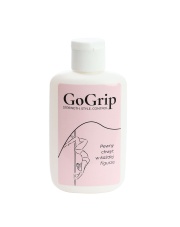
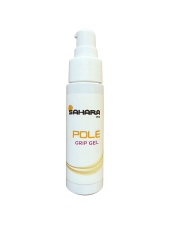
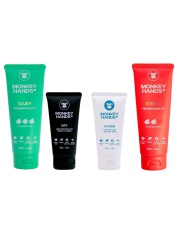
Silica-based grips – modern and less aggressive, Go Grip, Sahara, Monkey
The second major category includes grips based on silica and alcohol. These have dominated the pole dance market in recent years because they are gentler on the skin than chalk. Depending on the formula, they may focus on drying, forming a protective layer, or providing additional skincare benefits.
Examples include Monkey Hands (various versions – White, Blue, Red, Green, Black), GoGrip, and Sahara Grip. Monkey Hands offers the widest range – each version is designed for specific needs. GoGrip is a simpler and more affordable option, while Sahara activates with heat, making it ideal for sweat that appears during training.
Creams and adhesive products – additional grip support
Another category includes adhesive creams and wax-based products, which combine silica with resins or rosin. Their purpose is not only to dry the hands but also to create a slightly sticky surface that increases friction.
A popular example is Monkey Hands Green with rosin. These products are especially popular among beginners, as they compensate for weaker grip strength. Waxes like Itac2 are also used for knees and thighs, providing strong and long-lasting adhesion.
Sprays and alternative solutions – not only for pole dance, Go Stick
There are also rosin sprays, commonly used in aerial silks or sports like volleyball and handball. They increase friction but can be too sticky for pole dance. Therefore, they are usually a secondary option rather than a primary choice.
Cosmetic support – gels and DIY solutions
The final category includes cosmetic products that support grip and skin care. For example, 99% aloe vera gel moisturizes and soothes the skin while improving elasticity. Some dancers also use DIY solutions like homemade knee wax or foam grips to increase friction in specific areas.
How to choose the right product for your skin type in pole dance?
Choosing the right product is never simple because every skin reacts differently. There is no single “best grip” – testing different formulas is key.
If your hands sweat heavily, start with silica-based grips like GoGrip, Sahara, or Monkey Hands. They are gentler than chalk while still effective. If that’s not enough, you can try liquid chalk. Combining products can also work – for example, using a grip first and adding chalk or rosin during training.
If your skin is sensitive or prone to dryness, avoid aggressive chalk and choose grips with moisturizing ingredients like Monkey Hands Blue or Black.
If you need extra stickiness, products with rosin like Monkey Hands Green are a great option.
For beginners, testing small samples is the best way to find what works without wasting money.
The most common mistakes when using chalk and grips in pole dance
Applying product on wet hands
Always apply to clean, dry hands – otherwise the product won’t work properly.
Layering too much product
Old layers reduce effectiveness – wash your hands and reapply instead.
Using too much product
A thin layer is enough – more product can actually reduce grip.
No post-training skincare
Without proper care, skin becomes damaged and grip worsens.
Hand care when using chalk and grips in pole dance
Training significantly affects your skin. Regular care is essential to prevent damage.
Use products with:
- urea
- glycerin
- aloe vera
- natural oils
- panthenol
This helps maintain healthy, flexible skin and prevents injuries.
Summary
Choosing the right grip product – whether it’s liquid chalk, silica-based grip, or adhesive cream – depends on your skin, sweat level, and training style. There is no universal solution.
Testing different products and maintaining proper skincare will ensure better grip, safety, and overall training comfort.