Currency:

2025 / 10 / 01
Choosing the right pole dance grip can significantly improve the comfort and safety of your training sessions. In this article, we compare the Monkey Hands range with other popular grip products to help you decide which option truly fits your needs.
Table of contents:
- Why is grip so important in pole dance?
- Why do beginners often choose Monkey Hands Green?
- Why is the Monkey Hands range so popular?
- Comparing Monkey Hands with other pole grip products
- The most common skin issues in pole dance and how grip products help
- Blisters and friction burns on the hands
- Weak grip strength
- Dry yet sweaty skin
- Excessive hand sweating
- Skin irritation and dryness
Why is grip so important in pole dance?
Pole dance is a unique sport that combines technique, strength, and elegance of movement. In photos and videos it looks effortless and graceful, but anyone who has tried pole dancing knows that without a reliable grip, even basic tricks become difficult — not to mention dynamic transitions or advanced moves. If your hands are too dry or, on the contrary, sweaty and damp, the pole instantly becomes slippery. This is not only frustrating and discouraging, but can also lead to injuries and cause many people to quit at the very beginning.
That’s exactly why the pole dance community has used grip-enhancing products for years, such as pole dance chalk and pole grips. Their purpose is to help your hands maintain contact with the pole, increase friction, and provide a greater sense of control. Thanks to them, training becomes safer, progress comes faster, and the overall experience is much more enjoyable. Both beginners learning their first spins and advanced dancers preparing for competitions rely on these products.
At the beginning of your pole dance journey, the problem is often not excessive sweating or overly dry hands, but simply a lack of developed grip strength and skin adaptation to metal surfaces. Forearm muscles need time to strengthen, and the skin needs time to toughen up. This is where products such as Monkey Hands grip or other pole dance grip products can make a huge difference. The right product won’t replace muscle work, but it will help beginners stay on the pole longer, attempt tricks, and avoid becoming discouraged too early. Many people admit that without grip-enhancing products, their first training sessions would have felt too difficult and they would have given up quickly.
Why do beginners often choose Monkey Hands Green?
One of the most popular versions is Monkey Hands Green. This formula contains rosin, which — in addition to the drying effect created by alcohol and silica — adds extra stickiness. As a result, your hands don’t just stop slipping, they actually feel slightly “glued” to the pole. This effect is exactly why many beginners consider Monkey Hands Green the best pole dance grip for starting out.
This stickiness provides huge support during the first months of training, when grip strength is still developing. On one hand, it increases friction, and on the other, it gives confidence that your hand won’t suddenly slide off the pole. In practice, this means more control, more attempts, and less frustration. However, it’s important to know that rosin leaves a slightly sticky residue — some pole studios don’t allow it because it requires more thorough pole cleaning. That’s why, if you train in a studio, it’s always worth checking which grip products are permitted.
Why is the Monkey Hands range so popular?
The Monkey Hands range is so popular because it offers a wide variety of formulas that can be matched to different skin types and training styles. Unlike traditional powdered chalk, which works in a fairly uniform way, Monkey Hands provides different formulas with completely different effects.
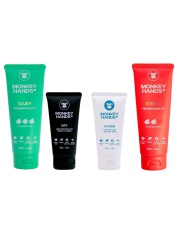
- Monkey Hands White – gentle, creates a protective film, contains no silica, recommended for naturally dry hands.
- Monkey Hands Blue – combines drying properties with skin care, suitable for moderate sweating.
- Monkey Hands Red – classic “dry hands” effect, fast drying for light to moderate sweating.
- Monkey Hands Green – rosin-based version, ideal for people who need extra stickiness, especially beginners.
- Monkey Hands Black – the strongest drying effect with added skin-care ingredients, designed for very sweaty hands.
- Black with Yellow Stripe – an extreme formula often chosen for competitions where maximum grip security matters.
This variety is exactly why Monkey Hands is often considered one of the best pole dance grip brands — everyone can find a version that works for them. The colorful bottles may look similar, but they perform very differently. The key lies in the formula: the balance of alcohol, silica, rosin, and skin-care ingredients.
Comparing Monkey Hands with other pole grip products
When searching for the best grip product for pole dance, aerial hoop, or aerial silks, you quickly come across names that are widely recognized in the community: Sahara Grip, GoGrip, classic chalks like Ocun, and many other grip brands. Each of these products has strengths and limitations, which is why it’s essential to choose something that works well with your skin, training style, and studio conditions.
To begin with, it’s important to understand that there are two main categories of products used in pole dance and aerial training: grips and chalks. Grips are usually based on silica combined with alcohol. Their purpose is to dry the hands and increase friction, improving grip on the pole. Traditional chalk products like Ocun are based on magnesium carbonate, which works much more aggressively and almost completely dries out the skin. They provide a very strong effect in the short term, but with regular use they often cause irritation and cracked skin — a serious issue for people training several times a week.
That’s why, for most people, comparing silica-based grips makes more sense. What determines how a product performs is mainly the type of silica used, how it’s modified, and what additional ingredients are included. Monkey Hands stands out because it offers different formulas tailored to various skin types and sweating levels. For example, the white version is intended for dry skin because it contains no silica and focuses more on skin conditioning than drying. Monkey Hands Green delivers a stronger effect thanks to the added rosin, which creates slight stickiness and stabilizes grip even when the hands aren’t in perfect condition. The red and blue versions focus on classic drying effects, while the black version is designed for very sweaty hands and intense training sessions.
Monkey Hands vs Sahara — differences in application and performance
Monkey Hands grips are applied after warm-up, when the hands are already warm and prepared for contact with the pole. They work immediately — the alcohol, silica, and other ingredients begin drying the skin and increasing friction right away.
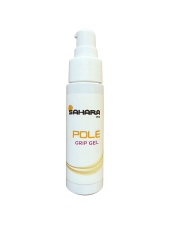
Sahara Grip works differently. It’s applied before warm-up, and the formula activates only once the hands heat up. The grip effect appears during training, making it especially useful for people whose hands become sweaty later into the workout.
The difference also comes from the silica technology. Sahara uses a modified silica that repels sweat — when your hands become damp, you simply wipe them off and they feel dry again. Monkey Hands uses silica that absorbs moisture like a sponge. Once saturated with sweat, it stops working effectively, so you need to wash your hands and reapply the product.
Both solutions work well, but in completely different ways. The right choice depends on how your hands behave and at what stage of training you need extra support.
Monkey Hands or GoGrip? Hybrid grips vs the most affordable classic silica grip
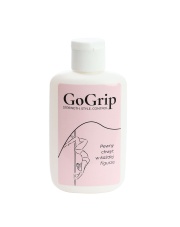
GoGrip is one of the most popular classic silica-based grips on the market. Its formula is built mainly around alcohol and silica, providing quick drying and a classic dry-grip effect. In that sense, it performs similarly to several Monkey Hands variants — especially the red and blue formulas.
However, the type and modification of silica make a big difference. That’s why some grips work better for specific skin types than others. GoGrip contains no additional skin-conditioning ingredients beyond the essentials, so it performs in a straightforward and predictable way — drying the hands and increasing friction, but without providing skin care or extra stickiness.
Monkey Hands offers much more flexibility: from the silica-free white formula for naturally dry hands, through conditioning formulas like blue and black, to the green version with rosin for a sticky effect. This makes it easier to choose a product that truly matches your skin and training conditions.
In terms of price, GoGrip is one of the most affordable grips available, making it a popular entry-level choice. It’s a simple and effective solution for people looking for basic grip support. Monkey Hands, on the other hand, offers more customization and a broader selection of effects.
In practice, many people start with GoGrip and later experiment with Monkey Hands. Quite often they notice a difference — for example, users switching to Monkey Hands Green or Black frequently mention feeling more control during grip-intensive tricks and transitions.
Sahara Grip vs GoGrip – two different approaches to pole dance grip
Although both Sahara Grip and GoGrip belong to the category of silica-and-alcohol-based grips, their formulas and performance differ significantly. Sahara Grip contains Alcohol Denat, Silica (modified silica), Hydroxypropylcellulose, and Aqua. Because of this, it works in a very specific way — it’s applied before warm-up and becomes fully active only once the hands heat up. This means Sahara activates during training rather than immediately after application. Its silica repels sweat rather than absorbing it, so when the hands become damp, wiping them off restores the feeling of dryness. This makes Sahara especially useful for people whose hands are dry at the beginning of training but become sweaty later on.
GoGrip has a simpler formula: Alcohol Denat, Silica, Aqua, and Cellulose Gum. It’s a classic alcohol-and-silica combination without conditioning ingredients or advanced modifications. The effect is immediate and predictable — a strong dry grip right after application. This type of product works well for people looking for a simple and instant solution. However, because it lacks moisturizing ingredients, frequent use can lead to dryness and skin irritation.
The difference between these products is also reflected in the price — GoGrip is one of the cheapest grips available, which makes it a common beginner choice. Sahara is more expensive, but its unique sweat-repelling technology provides greater comfort and control for many people struggling with sweaty hands during training.
Monkey Hands vs classic chalk (Ocun and others)
Classic chalk — such as Ocun (magnesium carbonate with alcohol) — works almost entirely by aggressively drying the skin. It absorbs sweat and leaves a dry layer behind, but often over-dries the hands, especially during frequent training.
Monkey Hands is a more advanced solution. Depending on the version, it can dry the hands, create a protective film, or provide slight stickiness (as in the green version). This means you can achieve a reliable grip without severely damaging your skin during regular training.
Many users report that chalk like Ocun worked great during the first month, but later their hands started cracking and required serious recovery time. By contrast, Monkey Hands grips allowed them to continue training comfortably, even during intense sessions.
That’s why, if you’re just beginning your pole dance journey and wondering which pole dance chalk or grip is best for you, the smartest solution is to buy grip and chalk testers. In our store, you’ll find sample-size testers that last for 2–3 uses. This allows you to try different formulas without spending a lot of money on full-size bottles. It’s the easiest way to test several options and discover which product works best for your skin type, sweating level, and training style.
The most common skin issues in pole dance and how grip products help
When training pole dance, aerial hoop, or aerial silks, almost everyone eventually encounters skin issues on their hands. This is completely natural — your hands are in constant contact with metal poles (stainless steel, chrome) or powder-coated surfaces. Skin that isn’t used to this quickly reacts: friction burns, blisters, and irritation appear, while maintaining a strong grip becomes increasingly difficult.
Blisters and friction burns on the hands
At the beginning of training, friction burns and blisters are usually the biggest challenge. Hands that are not yet accustomed to intense friction against metal quickly develop micro-injuries. This painful stage is something most beginners experience. Grip products don’t eliminate the problem entirely, but they can reduce it by improving grip stability — less slipping means less uncontrolled friction and a lower risk of skin damage.
Weak grip strength
Another challenge is simply weak grip strength. Beginners usually don’t yet have sufficiently developed forearm muscles, and their skin has not adapted to the pole. The result? Hands lose grip very quickly. This is exactly where pole dance grips and chalk become helpful. Even with weaker grip strength, these products make it possible to stay on the pole and actually complete elements during training. This boosts motivation instead of discouragement, because early success comes much faster.
Dry yet sweaty skin
Paradoxically, many people experience skin that is both dry and sweaty at the same time. It sounds contradictory, but that’s exactly how skin often reacts to metal contact: over-dried from aggressive products like chalk (which strips away the skin’s natural lipid barrier), yet simultaneously sweaty due to stress and physical effort. The result is irritated skin that still feels slippery.
In this case, the key is proper hand hydration outside of training — for example, with suitable creams — and only then using grip products. It’s best to choose formulas that contain not only silica, but also skin-conditioning ingredients such as glycerin, ferments, or botanical extracts (for example Monkey Hands Black or Blue).
Excessive hand sweating
One of the most common problems among both beginners and advanced dancers is excessive hand sweating. In contact with the pole, hands quickly become damp and grip performance disappears. In these situations, strong drying products work best — classic chalk (such as Ocun), Monkey Hands Green with rosin, or Monkey Hands Black. These products provide an immediate “dry hands” effect and reliable friction.
Skin irritation and dryness
Aggressive products such as powdered chalk have their advantages — they dry the hands instantly and provide a powerful grip. Unfortunately, they also over-dry the skin, damage the lipid barrier, and over time lead to cracking and peeling. This makes future training sessions painful and may require breaks from training. That’s why, if you train frequently, hybrid grips like Monkey Hands are usually the better option. In addition to silica, they contain conditioning ingredients and work in a less aggressive way.