 Currency:

2026 / 02 / 23
Table of contents:
- Aerial silk fabric – which one should you choose? Nylon or polyester in European practice
- European standards for aerial silk fabrics – how many are there and which is the most common?
- Nylon or polyester – why this isn’t a case of “better” and “worse”
- Fabric width – aerial silk or aerial hammock?
- Fabric weight and thickness – why both materials can feel “similar” in your hands
- Weave and slipperiness – how the fabric behaves on the skin and in tricks
- Finishing the edges – which aerial silk fabric needs edge protection?
- Snags and durability – what happens when a pull appears?
- Stretch – medium stretch vs low stretch and what it changes in the air
- How to choose aerial fabric consciously – without buying blind
- Summary – nylon or polyester for aerial silks?
- FAQ – the most common questions about aerial silk fabric
Aerial silk fabric – which one should you choose? Nylon or polyester in European practice
Choosing the right fabric for aerial silks is one of those decisions that genuinely affects training comfort, your sense of safety, and how quickly you learn new tricks. Although silks may look similar at first glance, in practice the differences between fabrics are very noticeable – both in how they feel and in how the aerial silk behaves in the air. What feels perfect for one person (greater fluidity and a “lighter” fabric response) may feel frustrating for someone else (a sense of slipperiness or reduced control). That’s why it’s worth approaching the topic like any other piece of sports equipment: not “which one is the best,” but which one is best for me.
If you’re wondering which fabric to choose for aerial silks, whether nylon or polyester is the better option, and how aerial silk fabric differs in terms of stretch, width and durability – this article will guide you through the key differences step by step. It’s a practical guide for anyone who wants to buy consciously rather than “blindly”, especially when ordering online without the chance to touch the fabric beforehand.
European standards for aerial silk fabrics – how many are there and which is the most common?
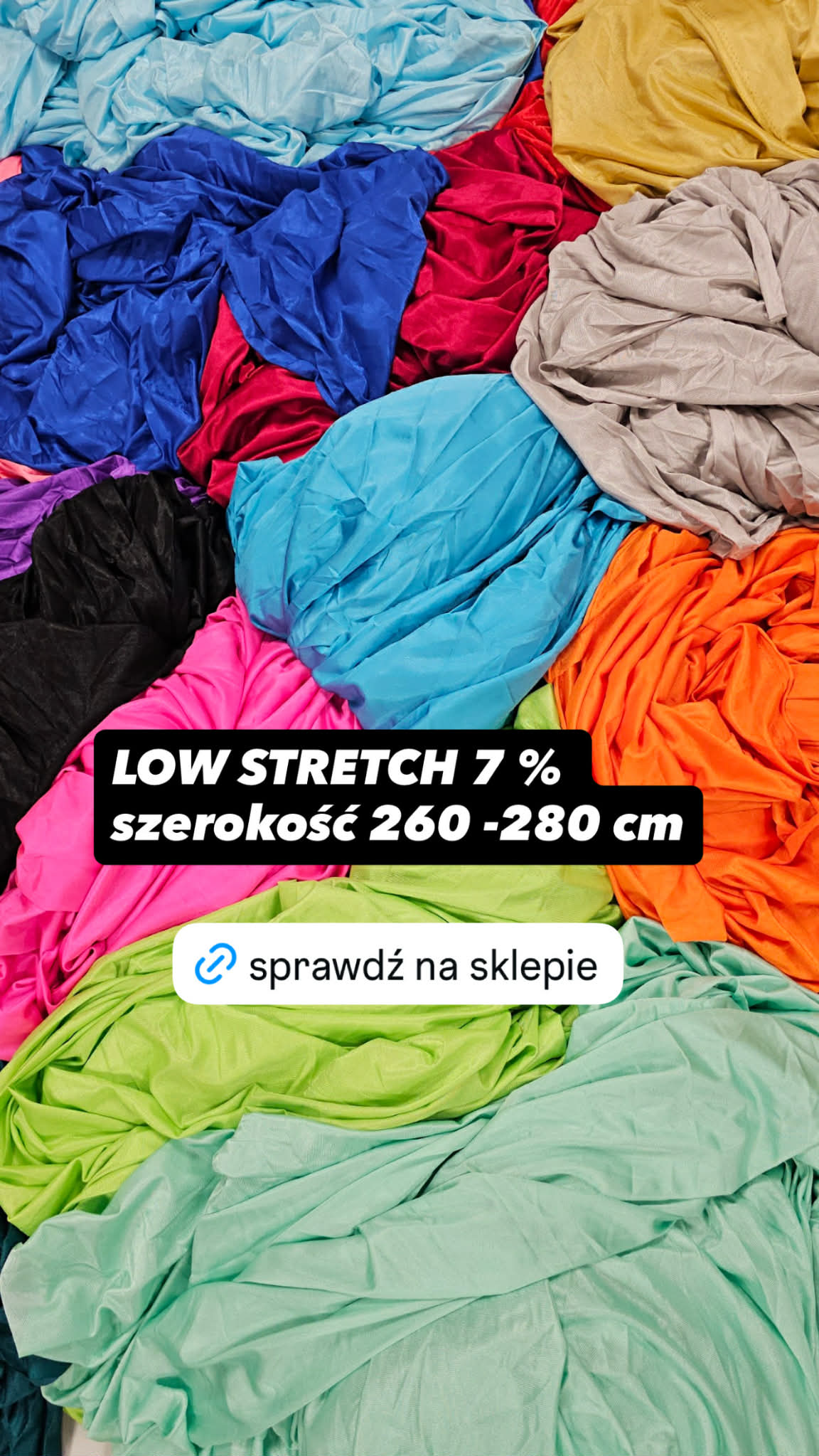
In Europe, there are three technical variants of aerial silk fabrics, most often distinguished by fabric width. On the market, you’ll usually come across materials approximately 280 cm, 150 cm, and more rarely 125 cm wide. This third option (around 125 cm) is not available in our offer – it’s a narrower fabric used only occasionally, usually for more niche applications or very specific training preferences. For most schools and users, it’s not a “must-have”, which is why it isn’t part of the standard range in many stores.
In practice, however, when we talk about what actually dominates studios and stores across Europe, you’ll most commonly find two types of aerial silk fabric: nylon and polyester. These are the two standards most often seen in the same stores and the same aerial studios – and they are the foundation of making an informed choice. If you search Google for phrases like “aerial silk fabric”, “which aerial silk for home use” or “nylon or polyester for aerial silks”, you’ll almost always end up comparing these two types.
Nylon or polyester – why this isn’t a case of “better” and “worse”
When people ask “nylon or polyester for aerial silks?”, they’re often hoping that one fabric is objectively the best. In reality, it doesn’t work like that. Just as in pole dance some people prefer a 42 mm pole and others a 45 mm one, in aerial the right fabric depends on personal preference: how it feels on the skin, your training style, movement dynamics, and what you expect from the equipment. That is exactly why both fabric types are used across Europe – because each one suits different people and different uses.
A well-chosen aerial fabric can make training feel easier and more enjoyable, almost as if “everything just works better”. A poorly matched one can be frustrating – even if it’s high quality. What’s important is that the differences between nylon and polyester are not only about the fibre itself, but also the weave, fabric weight, finishing, and often even how the material behaves after cutting or when snagged.
Fabric width – aerial silk or aerial hammock?
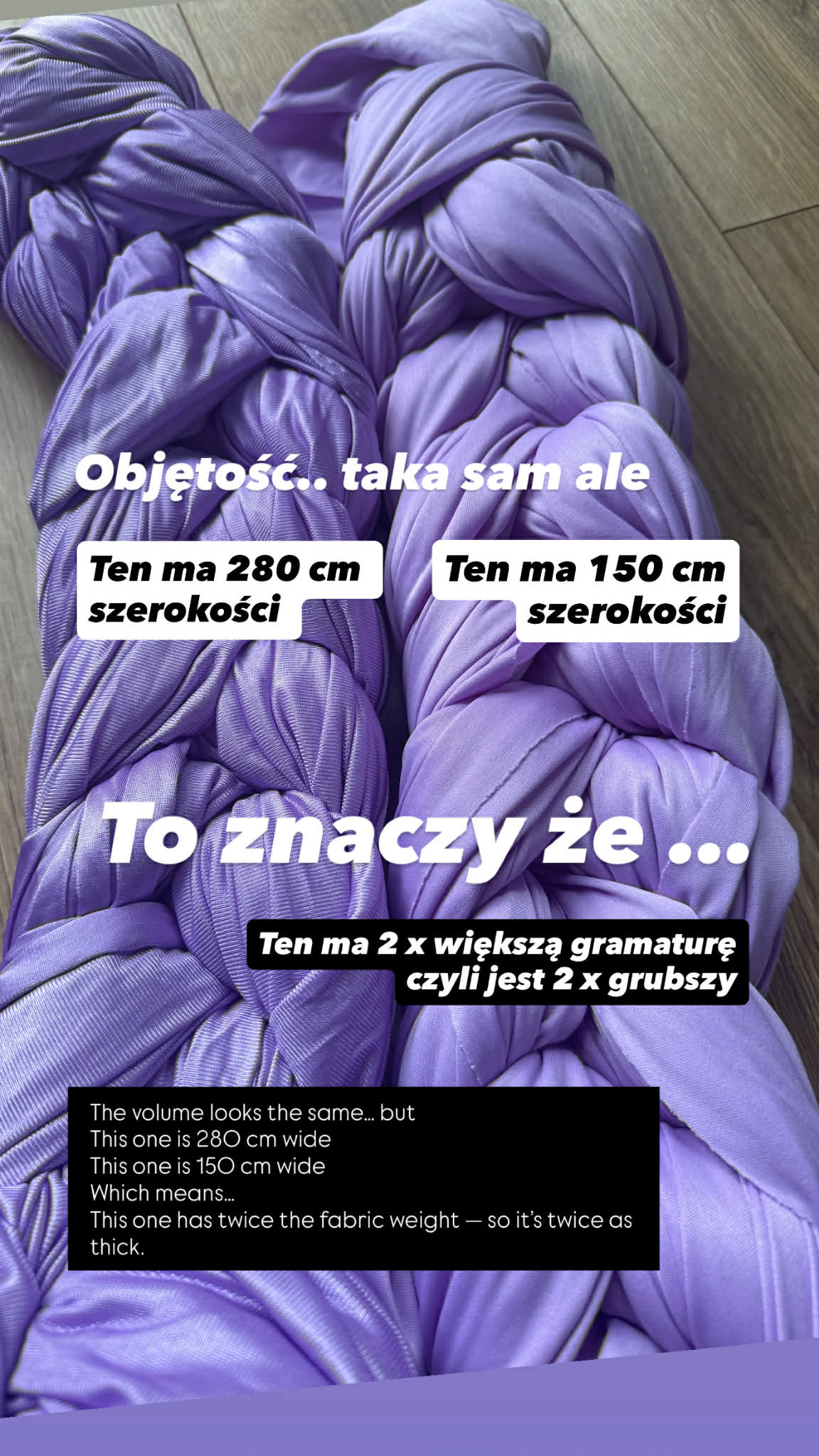
One of the most practical differences is fabric width. Material that is approximately 280 cm wide is often chosen not only as an aerial silk, but also as a base for an aerial hammock. The wider fabric offers that versatility – you can train on silks, while also having a fabric suitable for hammock work. For many people, that’s a major advantage, especially if they don’t want to buy two different fabrics when starting out.
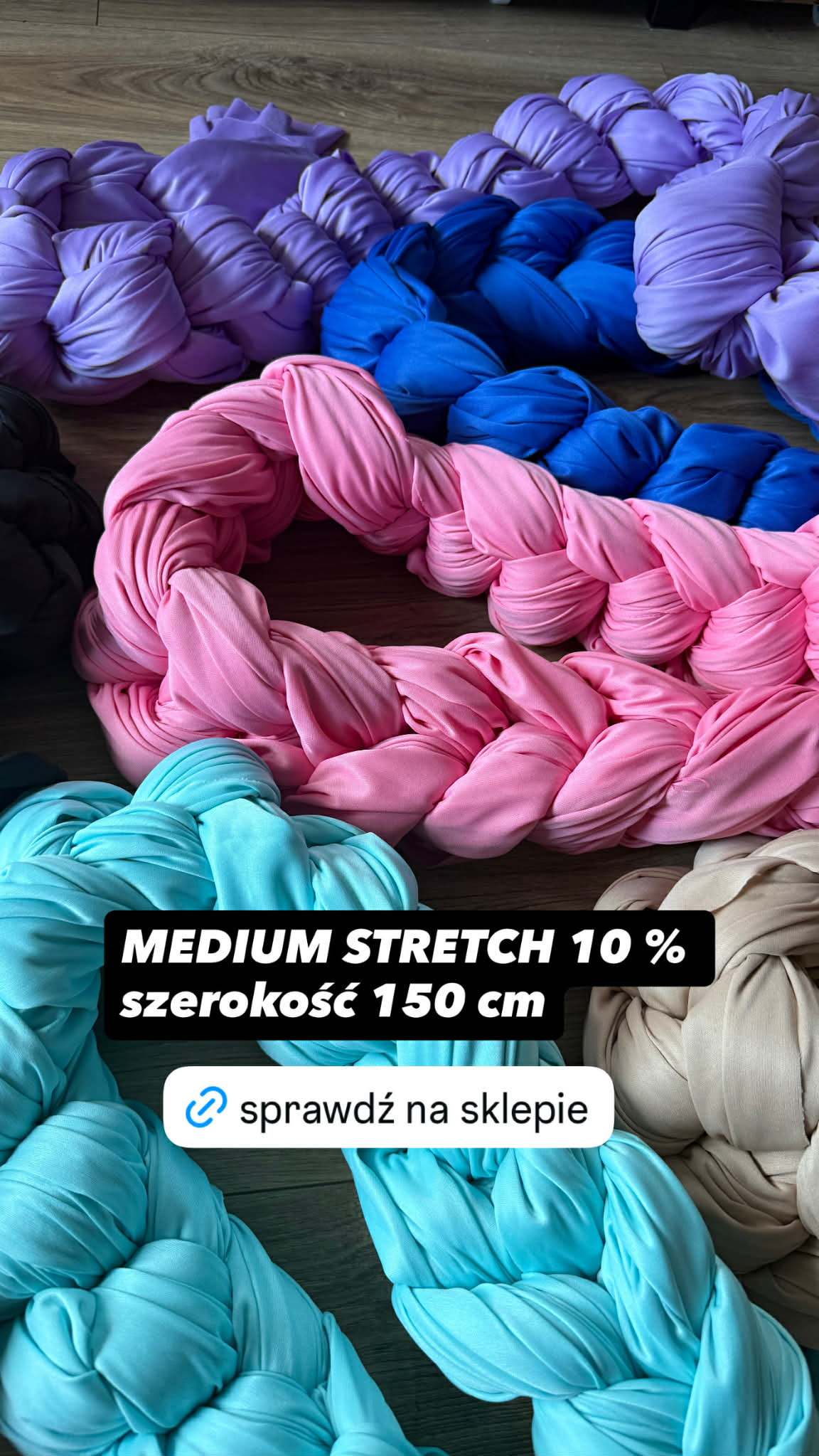
On the other hand, fabric around 150 cm wide is the classic choice for standard aerial silks. It works perfectly for silk training, but it isn’t designed for hammocks. So if you’re searching Google for “aerial hammock fabric” or “what fabric for aerial silks”, width should be one of the first filters you use – even before you start thinking about colour or price.
Fabric weight and thickness – why both materials can feel “similar” in your hands
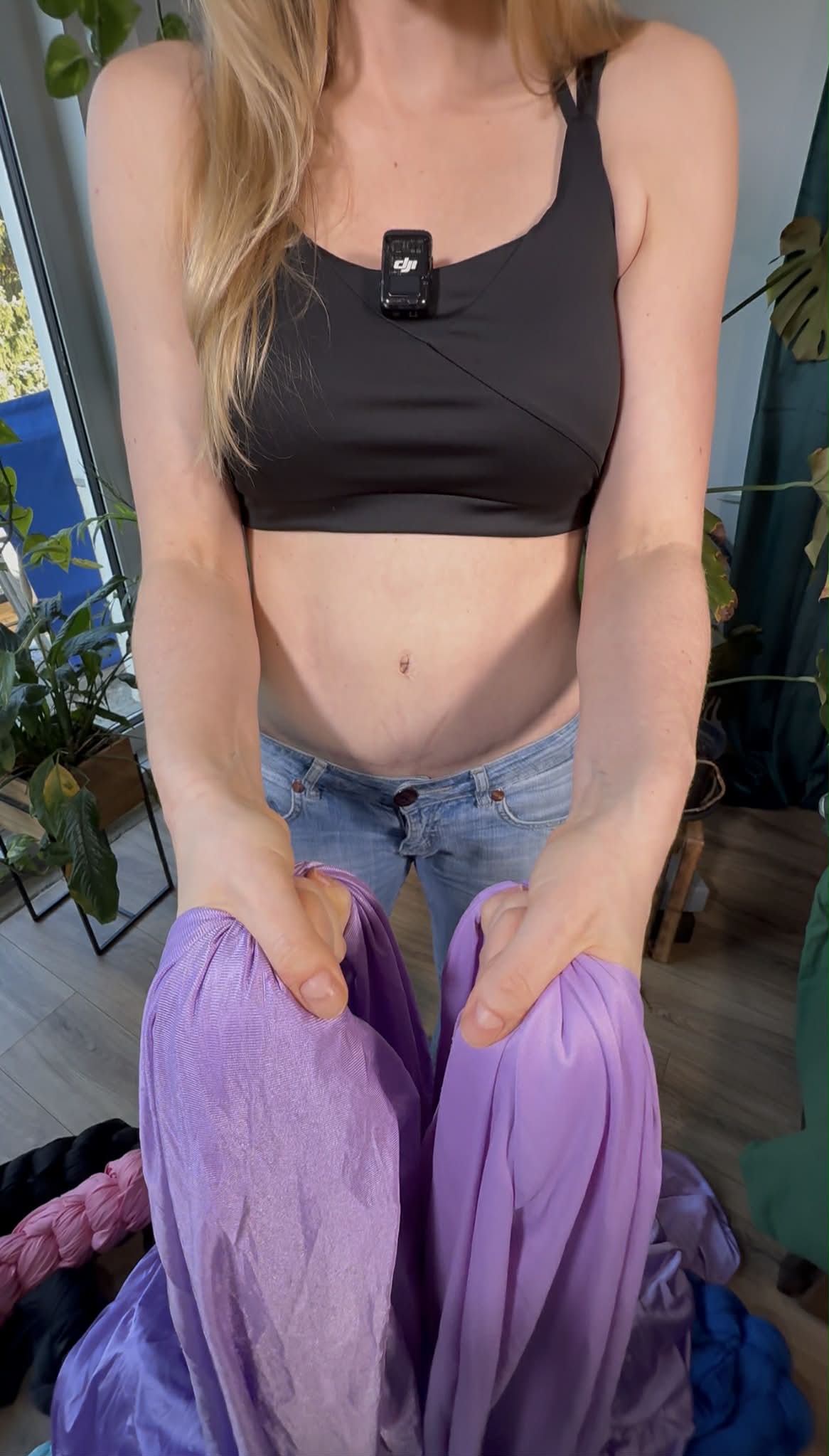
In practice, it often turns out that a wide fabric and a narrow one can take up a very similar amount of space when folded in your hands. That’s not an illusion – it comes down to fabric weight. The narrower fabric is often noticeably thicker and heavier, while the wider one may be thinner but covers a larger surface area. The end result in your hands can feel surprisingly similar, even though when unfolded they are completely different fabrics.
This difference affects grip, hand work, wraps, and the overall “feel” of the fabric while climbing or transitioning. Fabric weight influences whether the material feels “substantial” and stable, or lighter and more fluid. For some people, a thicker fabric provides better control, while for others, a lighter fabric means more comfort and less “fighting” with the material.
Weave and slipperiness – how the fabric behaves on the skin and in tricks
The differences between nylon and polyester are not only about the fibre itself, but also about the weave. In one material, you may notice characteristic tiny holes along the edges – this is a result of the weaving process. In the other, the edges appear more uniform, without this perforated effect. These details usually start to matter once you begin training more intensively, wrapping the fabric frequently, working with friction, and repeating the same transitions many times.
In practical terms, one fabric may feel slightly more slippery and reflect colour more strongly, while the other may feel more matte, with a greater sense of friction. That’s why some people specifically search for answers to “which aerial silk fabric is less slippery”, while others want exactly the opposite – greater fluidity and easier transitions. It’s worth remembering that slipperiness and friction are neither inherently good nor bad. They’re simply characteristics that will either work in your favour or not – depending on your technique, your level, and the type of elements you train most often.
In practice: if you’re just starting out, you may prefer more control and a “safer” grip. If you’re more advanced and working on fluidity, you may enjoy a fabric that moves more easily through your hands and creates softer transitions. This is also one of the reasons why both standards coexist in Europe – because they serve different needs.
Finishing the edges – which aerial silk fabric needs edge protection?
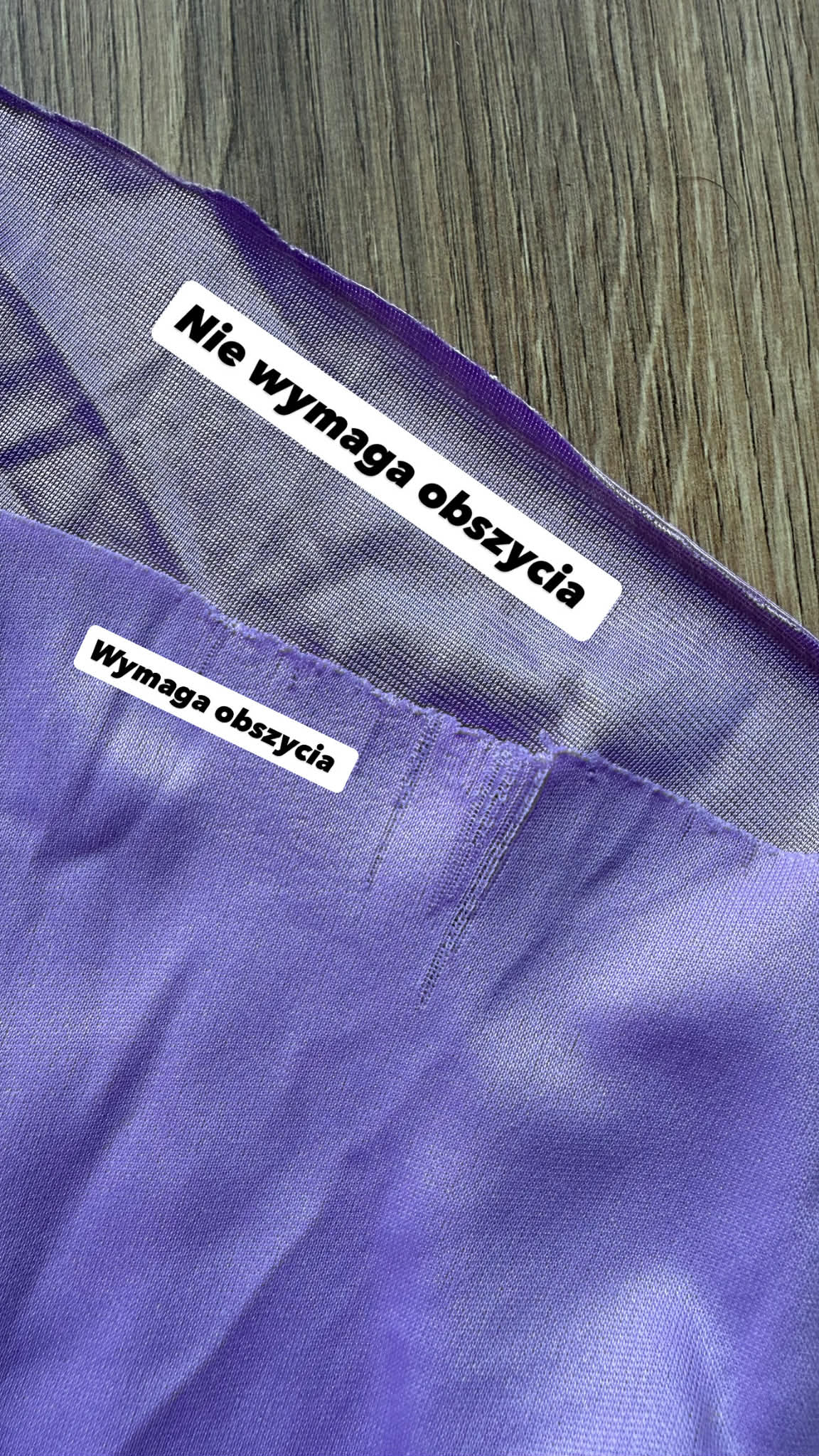
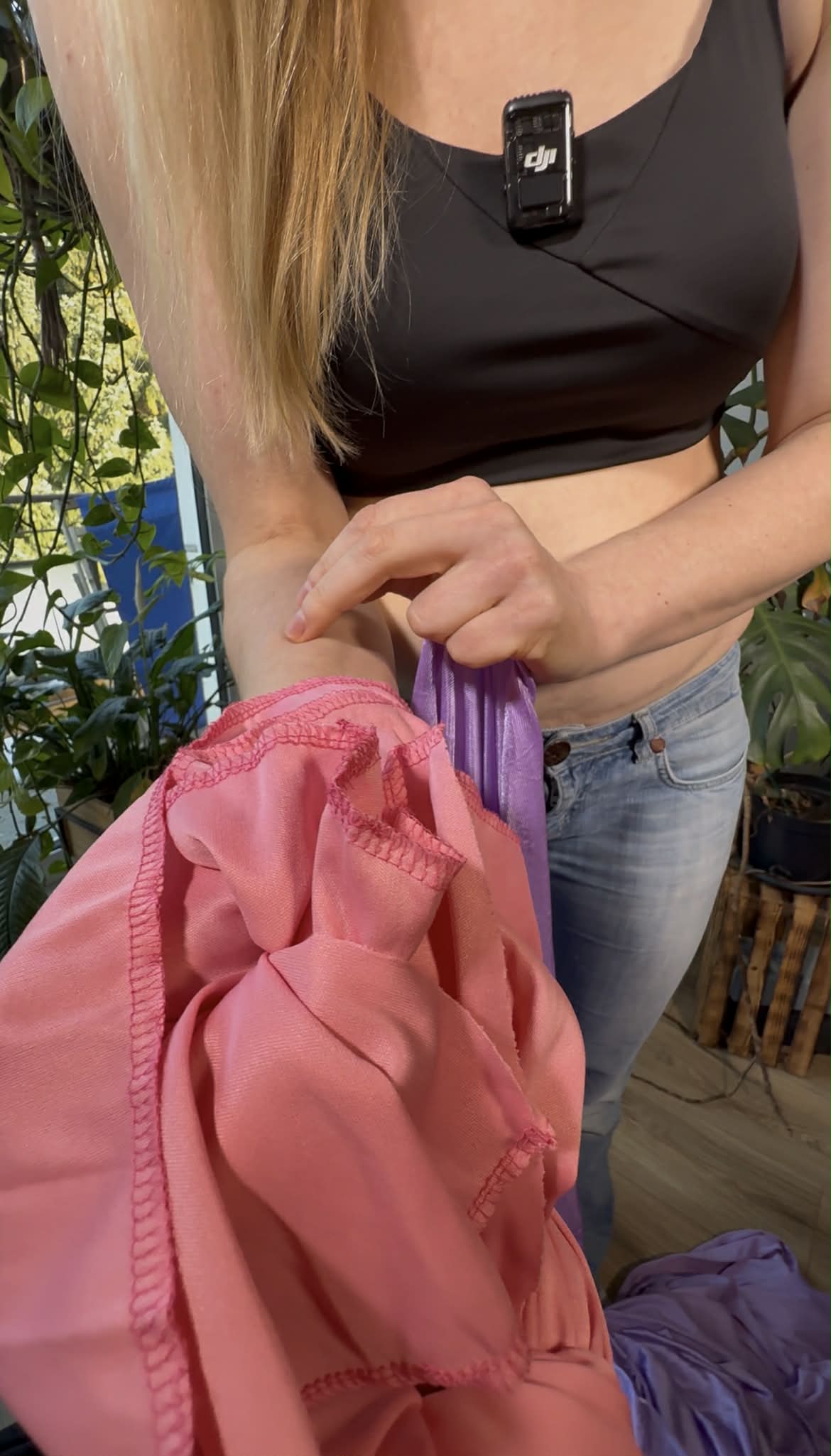
One of the more important practical differences concerns what happens after the fabric is cut. One type of fabric can be shortened without needing edge finishing – the cut edge remains stable and the fabric doesn’t continue to run. The other type requires hemming after every cut, because it tends to ladder or develop pulls. This is very useful information if you plan to adjust the silk length to your studio, ceiling height or specific rigging setup.
People often search for questions like “do aerial silks need hemming” or “why is my aerial fabric fraying” – and the answer often begins with the type of fabric and how its edges behave. If you know you’ll be cutting the fabric, this feature may be decisive. Even if you don’t plan to cut it, it’s still worth knowing – because it affects maintenance and the long-term lifespan of the material.
Snags and durability – what happens when a pull appears?
Different fabrics react differently to snags. In one case, a pulled thread often stays localised – a small hole may appear, but the damage doesn’t continue. In the other, a snag may continue running along the fabric, which in practice can become a problem, because the material may need replacing sooner than expected. For someone training at home, this simply means being more careful. For a studio, where equipment is used intensively, this becomes an economic and organisational factor.
It’s worth highlighting one thing here: fabric durability isn’t only about “load-bearing strength”, but also about how it behaves in everyday use – contact with jewellery, nails, Velcro in bags, carabiner hardware, transport, or the floor. That’s why when buying aerial silk fabric, it’s worth thinking about the entire lifecycle of the fabric, not just your first impressions when you unpack it.
Stretch – medium stretch vs low stretch and what it changes in the air
Stretch is a topic you shouldn’t overlook when asking “which fabric should I choose for aerial silks”. Fabrics described as medium stretch tend to behave more elastically, usually at around 10%. This gives a softer sensation in movement and a gentler response in the air. For some people, that means greater comfort, especially during dynamic elements where the “softness” of the fabric can create a sense of better cushioning.
Fabrics described as low stretch have less elasticity (around 6–7%), which makes them more stable and less “springy”. For some, this means better control in static positions and greater predictability in how the fabric behaves. For others, reduced stretch can mean a firmer feeling during dynamic work. The right choice depends on your preferences and whether your priority is stability or cushioning.
In practice, it’s worth thinking about it this way: if your training focuses mainly on technique, positions, entries, precision and control – lower stretch often wins. If your training is heavily focused on dynamics, drops and fluid transitions – you may appreciate a more elastic fabric. Of course, there are also people who love one solution “for everything”, but that’s exactly what conscious choice is about: you understand why you prefer something, rather than buying at random.
How to choose aerial fabric consciously – without buying blind
The easiest way to start is by asking what exactly you need the fabric for. If you also want to use it for an aerial hammock, width will be the deciding factor. If you mainly train dynamic elements, stretch and the “softness” of the fabric may be crucial. If your focus is on stable positions and technique, you may prefer a less stretchy fabric. That’s the foundation of the choice, before you even move on to details like sheen, colour or hand feel.
It’s also worth thinking about practical use: do you plan to shorten the fabric, will it be heavily used in a studio, and do you want better resistance to snags? Ultimately, choosing aerial fabric works very much like choosing any other piece of training equipment – you match it to yourself, not the other way around. And that’s the biggest difference between a quick purchase and a conscious one: you already know how you want the fabric to behave in your hands.
If you have the chance to test both standards (nylon and polyester), even a short comparison can tell you a lot. You’ll feel the difference immediately, especially in grip and in how the fabric “flows” through your hands. If you’re buying online, pay particular attention to the three parameters that make the biggest difference in practice: width, stretch, and whether the fabric requires hemming after cutting.
Summary – nylon or polyester for aerial silks?
In Europe, there are three width variants of aerial silk fabrics (around 280 cm, 150 cm and more rarely 125 cm), but in reality the standard in shops and studios is based mainly on two materials: nylon and polyester. They differ in width, fabric weight, weave, slipperiness, snag resistance and level of stretch. That’s why the question “which fabric for aerial silks” is best answered not by looking for a single winner, but by matching the fabric to your training style.
There is no single best fabric for everyone. There is, however, a best aerial silk fabric for your body, your technique and your goals. If you can, test both – you’ll feel the difference straight away. And if you’re buying online, focus on width, stretch and whether the fabric needs hemming after cutting. These are the three factors that make the biggest difference in real use and have the greatest impact on whether training feels enjoyable, safe and truly “your style”.
FAQ – the most common questions about aerial silk fabric
Do aerial silks need hemming?
That depends on the type of fabric. Some materials remain stable after cutting, while others require the edges to be secured (hemmed), because they may ladder or develop pulls.
Which aerial silk fabric is less slippery?
The feeling of slipperiness depends on the weave and finish. More matte fabrics usually provide more friction, while brighter, more light-reflective fabrics are often perceived as more slippery. The best choice depends on your personal preference and training style.
What width of fabric should I choose for an aerial hammock?
For an aerial hammock, a wider fabric (around 280 cm) is usually the standard choice. Narrower fabrics are mainly intended for classic aerial silks.
Na podstawie 0opinii naszych klientów
Your review may be the first one.


