Currency:

2026 / 04 / 24
If you come across terms like aerial silks, silk dance, or aerial yoga, it’s easy to assume they all refer to a similar type of activity. In both cases, you’ll see fabric suspended from the ceiling, movement in the air, and photos on social media that look quite alike. It’s only when you take a closer look that you realize these are two completely different disciplines.
It’s not just about the level of difficulty, but also the overall nature of the classes, how your body feels after training, and the way each practice affects you. One form is better suited for those looking for stretching, relaxation, and gentler movement. The other appeals more to people who want to focus on technique, learn specific moves, and gradually build strength and control.
Aerial yoga – a calmer form of suspended movement
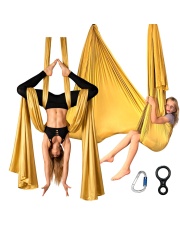
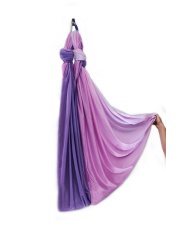
Aerial yoga is based on positions inspired by traditional yoga, stretching, and mobility exercises. It’s often referred to as yoga with silks, but that can be slightly misleading. In these classes, you don’t use classic aerial silks, but rather an aerial hammock that supports your body and provides a much greater sense of stability.
This hammock is what gives aerial yoga its calmer character. The fabric wraps around your body, helps you move into inverted positions, and supports you in moments where relaxing without assistance would be much harder. This makes it easier to focus on breathing, mobility, and body awareness instead of simply holding yourself in place.
That’s why aerial yoga often attracts people who aren’t looking for an intense workout, but rather a different kind of movement compared to traditional fitness classes or mat-based yoga. It’s a slower, more fluid practice and usually less physically demanding at the beginning.
Aerial silks – technique, grip, and figures
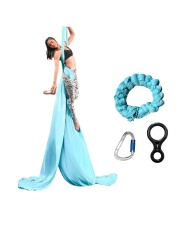
Aerial silks is a completely different type of training. Instead of a hammock, you work with long strips of fabric that don’t support your body in the same way as aerial yoga. You need to learn grip, climbs, wraps, and how to coordinate your body with balance and movement.
That’s why silk dance requires more focus from the very first class. You’ll be climbing, wrapping the fabric, and learning your first figures, all of which must be performed in the correct sequence. Entering movement feels very different compared to aerial yoga – the fabric doesn’t provide the same level of support.
Over time, aerial silks develops strength, coordination, spatial awareness, and greater control of your body in suspension. For many people, this is the most engaging part – the training isn’t just about stretching or breathing, but about learning new elements and combining them into increasingly complex sequences.
Key differences between aerial yoga and aerial silks
In photos, both forms can look similar, which can be misleading. In aerial yoga, your body can rest on the fabric and move into positions with more ease. In aerial silks, everything depends on your ability to grip the fabric, hold it, and use it effectively during movement.
The teaching approach is also different. Aerial yoga focuses more on stretching, releasing tension, and improving mobility. Aerial silks offers a completely different experience – more technique, greater engagement of the upper body, and a clear sense that you’re learning a specific skill. Even though both use fabric suspended from the ceiling, a yoga hammock and aerial silks differ in structure and function, which directly affects how the training looks and what you can do. They are not two versions of the same workout, but two entirely different experiences.
What to choose as a beginner
It largely depends on what you expect from your training. If you’re looking for a calmer type of movement, want to improve flexibility, relax, and relieve tension in your body, aerial yoga will be the easier entry point. It offers more support and helps you get comfortable with being suspended more quickly.
If you’re drawn to the technical side of training, the sense of progress, and learning new figures, aerial silks may be a better fit. The beginning is more demanding, as your body needs to adapt to grip, tension, and movement sequences, but that’s exactly what later brings a strong sense of satisfaction.
You also don’t have to treat this as a permanent choice. Some people start with aerial yoga to get used to suspended movement, then transition to silks. Others go straight into aerial silks because they’re more interested in dynamic movement and learning tricks.
What you’ll actually feel after your first class
The choice between aerial yoga and aerial silks is often decided very quickly – usually after the first class. The differences in how they feel are clear enough that it’s easy to tell which one suits your body better.
Comparing these two forms shows clearly that they are not interchangeable. The only thing they share is the suspended fabric – everything else, from the nature of the class to the results, follows a completely different path.