 Currency:


What are aerial crash mats?
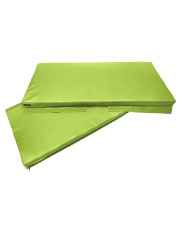
Aerial crash mats are specially designed safety mats created for people training aerial arts. They are used during practice on aerial hoop, aerial silks, and aerial yoga hammocks. Their main purpose? To provide maximum safety during aerial training and effectively cushion any potential fall from height.
Their well-thought-out construction also plays an important role. These mats are made from high-quality materials, making them both durable and comfortable to use. Interestingly, most of these products are made in Poland – which means local support and strict quality control. The range includes both square and round models in different sizes, making it easy to find the right fit for every user – whether you train in a professional studio or at home.
Choosing the right aerial crash mat is not something to overlook. Why? Because proper cushioning means a lower risk of injury. Modern acrobatic mats not only protect you, but also support skill development – helping you practise more advanced tricks with greater confidence. That’s why training mats are an absolutely essential part of the setup for anyone serious about aerial arts.
What types, sizes and shapes of aerial crash mats are available?
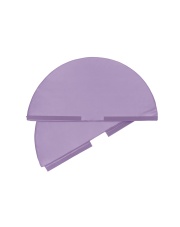
Aerial crash mats come in many different shapes and sizes, making it easy to match them to your training style and setup. The most common options are square mats with a side length of 120 cm and round mats with a diameter usually ranging from 120 cm to 150 cm.
Both versions typically have a standard thickness of 10 cm, which makes them a great choice for training on aerial hoop or aerial silks.
It’s also worth looking at folding mats – divided into 3 or 4 sections. This makes them much easier to transport and store, which is especially useful for instructors teaching in different locations. Folding crash mats are also incredibly practical in professional studios, where mobility and quick space adaptation really matter.
The wide colour range of covers is another advantage – especially when made from waterproof faux leather or PVC. This allows you to personalise your equipment to match your preferences. Choosing the right size and shape of crash mat affects not only comfort, but also safety during training – and that’s absolutely key in aerial arts.
How do you choose the right thickness, firmness and filling for an aerial crash mat?
Choosing the right thickness, firmness and filling for an aerial crash mat is the foundation of safe and comfortable training. The most common thickness is 10 cm – which works perfectly for aerial training up to 2 metres above the ground. However, if you plan to practise more advanced tricks at greater heights, it’s worth considering a mat as thick as 20 cm. This provides even better impact absorption in case of a fall – and that’s exactly what matters most.
The firmness of the mat should be matched to the user’s weight and the intensity of training. Heavier users or those training very intensively should choose mats made with foam at a density of 70 kg/m³. Lighter aerialists can go for foam with a density of 35 kg/m³. This helps create the ideal balance between support and comfort.
When it comes to the filling, polyurethane foam is the most commonly used option, known for its flexibility and durability. This type of mat quickly returns to its original shape after each use. A well-chosen crash mat not only improves comfort, but above all reduces the risk of injury – so it’s definitely not worth cutting corners here.
How do aerial crash mats improve training safety?
Aerial crash mats play a fundamental role in improving safety during aerial arts training. They effectively cushion falls, significantly reducing the risk of injury. For example, choosing a solid square mat measuring 120 cm allows you to practise even more advanced tricks with much greater confidence.
High-quality materials and a stable construction also make a big difference – they help prevent the mat from shifting during training, which improves both stability and comfort. In addition, an anti-slip surface provides a more secure feel even during dynamic movement, which positively affects the overall quality of training.
In professional aerial studios, crash mats are an absolute essential – used by both beginners and experienced aerialists. Interestingly, they are not limited to just aerial hoop or aerial silks. They also work perfectly well for fitness training or pole dance crash mats. Their versatility makes it hard to imagine aerial training without a proper crash mat.
What materials and design features affect the durability of an aerial crash mat?
The durability of an aerial crash mat depends mainly on the quality of the materials used and the overall construction. The most important element is high-density polyurethane foam, which provides resilience and resistance to deformation. Thanks to this, the mat keeps its cushioning properties for a long time – even with intensive use.
A cover made from waterproof faux leather not only protects the mat from dirt, but also makes it easier to clean. Faux leather is highly resistant to mechanical damage, which helps extend the product’s lifespan. In addition, strong fastenings and durable core-spun threads help keep the cover securely in place, reinforcing the whole structure.
Some mats also feature a folding design, which makes them much easier to transport and store. Practical handles make moving the mat simple – something both instructors and aerialists will appreciate. Solutions like these help organise the training space more efficiently and adapt it quickly to changing needs.
It’s also worth noting that manufacturing in Poland not only supports local businesses, but also guarantees a high standard of craftsmanship. As a result, aerial crash mats are not only durable, but also safe – even with very intensive use.
What accessories and equipment can complement aerial crash mats?
Aerial crash mats can easily be complemented with a range of accessories that improve both comfort and safety during training. The most important element is ceiling anchors – these provide a secure suspension point for your equipment. Carabiners are also extremely useful, allowing you to quickly attach and remove hammocks or silks, which makes organising your training much easier. Aerial straps also play an important role by improving safety during aerial movements and transitions.
Additional equipment may also include aerial yoga hammocks and stall bars, which expand your training possibilities. What’s more, crash mats work perfectly with:
- exercise mats,
- fitness trampolines,
- bungee fitness equipment.
It’s also worth remembering replaceable covers, which help protect the crash mat from dirt and damage. Their anti-slip properties make using the mat not only safer, but also more comfortable – especially during longer, more intense sessions. With the right accessories, training becomes more effective and more comfortable, making progress in aerial arts much easier to achieve.
How do you care for the hygiene and maintenance of an aerial crash mat?
Proper care and hygiene are essential if you want your aerial crash mat to last. Regular cleaning helps maintain both its cushioning performance and its appearance. Covers made from waterproof faux leather make this much easier – simply wipe them down with a soft, slightly damp cloth and a mild detergent. After cleaning, it’s best to dry the mat thoroughly before folding or storing it away.
Using replaceable covers is a great way to keep things clean – especially in places where mats are heavily used, such as professional studios or aerial schools. Regular maintenance helps prevent unpleasant odours and extends the lifespan of the materials the mat is made from. Thanks to that, the equipment keeps its performance for a long time, while users can continue to enjoy comfort and safety during every session.
How should you transport and store an aerial crash mat properly?
Transporting and storing an aerial crash mat requires a little attention if you want the equipment to stay in great condition for as long as possible. Folding models – divided into 3 or 4 sections – are especially practical because they are much easier to move and store. Durable handles also make transportation more convenient and ergonomic.
It’s worth noting that this type of mat does not include a pole opening, which makes it more universal and easier to move around. Made from durable materials such as faux leather and polyurethane foam, these mats are highly resistant to mechanical damage. However, it’s important to remember that delivery and order fulfilment costs are covered by the customer – which can affect the overall waiting time.
When storing your crash mat, it’s best to keep it in a dry place, away from moisture and other harmful external factors. It’s also a good idea to check its condition from time to time – reacting quickly to any damage can help avoid bigger problems later on. This approach will definitely extend the lifespan of your mat and help keep future training sessions safe.


